You’ve probably heard the stories about Singapore’s famously strict rules, and maybe you’re a little nervous. It’s a common feeling. Many travelers worry, “Will I get fined for accidentally dropping a wrapper?” or “Is it true I can be fined just for forgetting to flush?”
We’re here to put your mind at ease. These rules aren’t traps designed to catch tourists. They are the simple, shared habits that create the incredible public comfort you’ve come to enjoy—like being able to sit on any park bench without a second thought.
Think of this as your “comfort guide.” While some rules are common sense, the real-world scenarios (like an accidental drop or a full bin) are what cause anxiety. We’re here to walk you through those specific situations for littering and public toilets, swapping that worry for confidence so you can relax and enjoy your trip.
The Big One: Littering (and How to Easily Avoid It)
When we think of littering, we usually picture dropping a food wrapper or a drink cup. In Singapore, the definition is a bit broader and includes small items like tissue paper and cigarette butts.
It also includes spitting, which is treated as a serious offense for public health reasons. The rule here is simple and absolute: just don’t. This includes spitting on the pavement, into a drain, or onto the grass.
But the law also covers situations you might not expect. Here are a few scenarios to be mindful of for a stress-free trip:
Let’s talk about the fines. Yes, they are high. For a first-time offense, you can face a “composition sum” (an on-the-spot fine) of SGD$300. Repeat offenders can even be given a “Corrective Work Order” (CWO)—and yes, this applies to tourists as well—requiring them to clean a public place while wearing a bright vest—a powerful reminder of the shared responsibility.
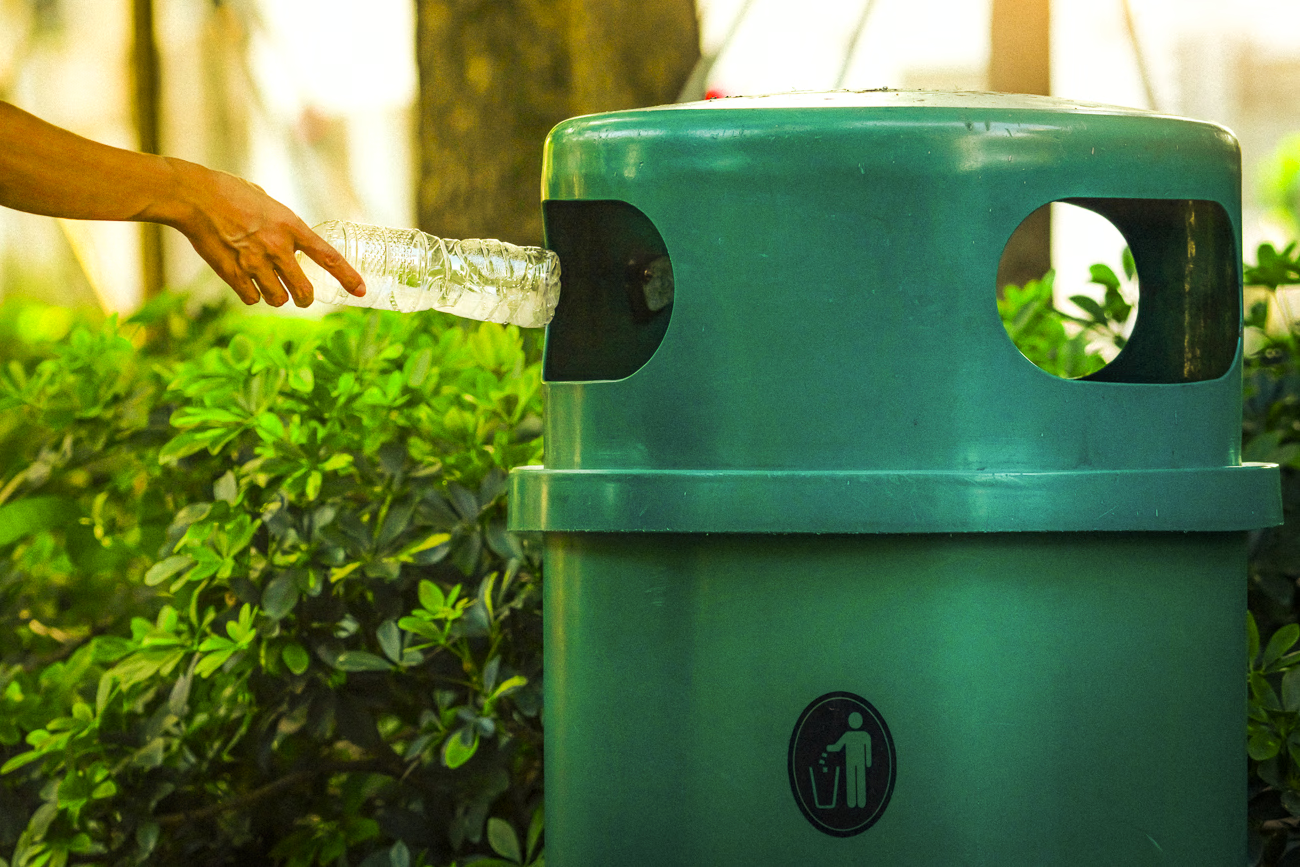
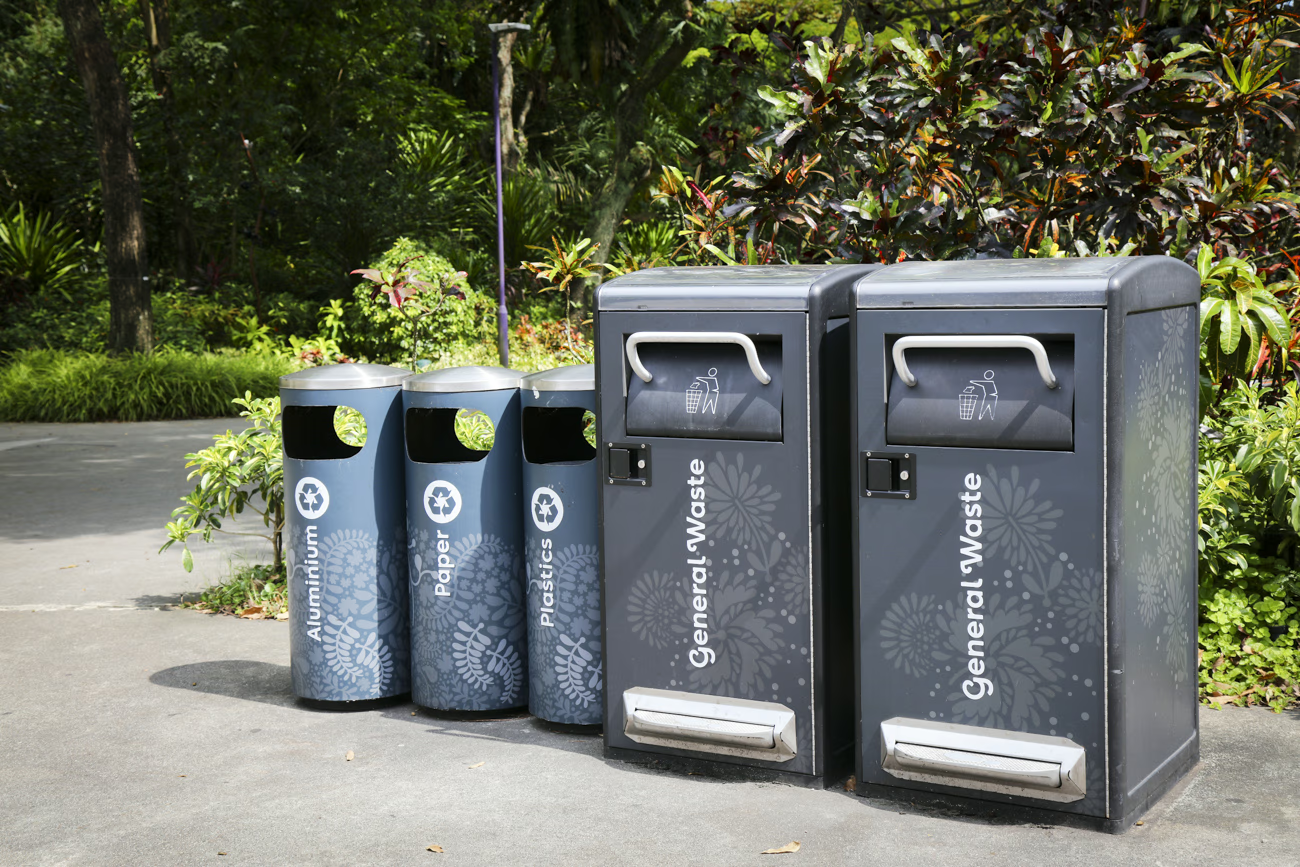
You don’t need to worry, as it is incredibly easy to find a bin. You will always find them readily available at bus stops, malls, MRT stations, and parks. You’re almost always just a few steps away from one.
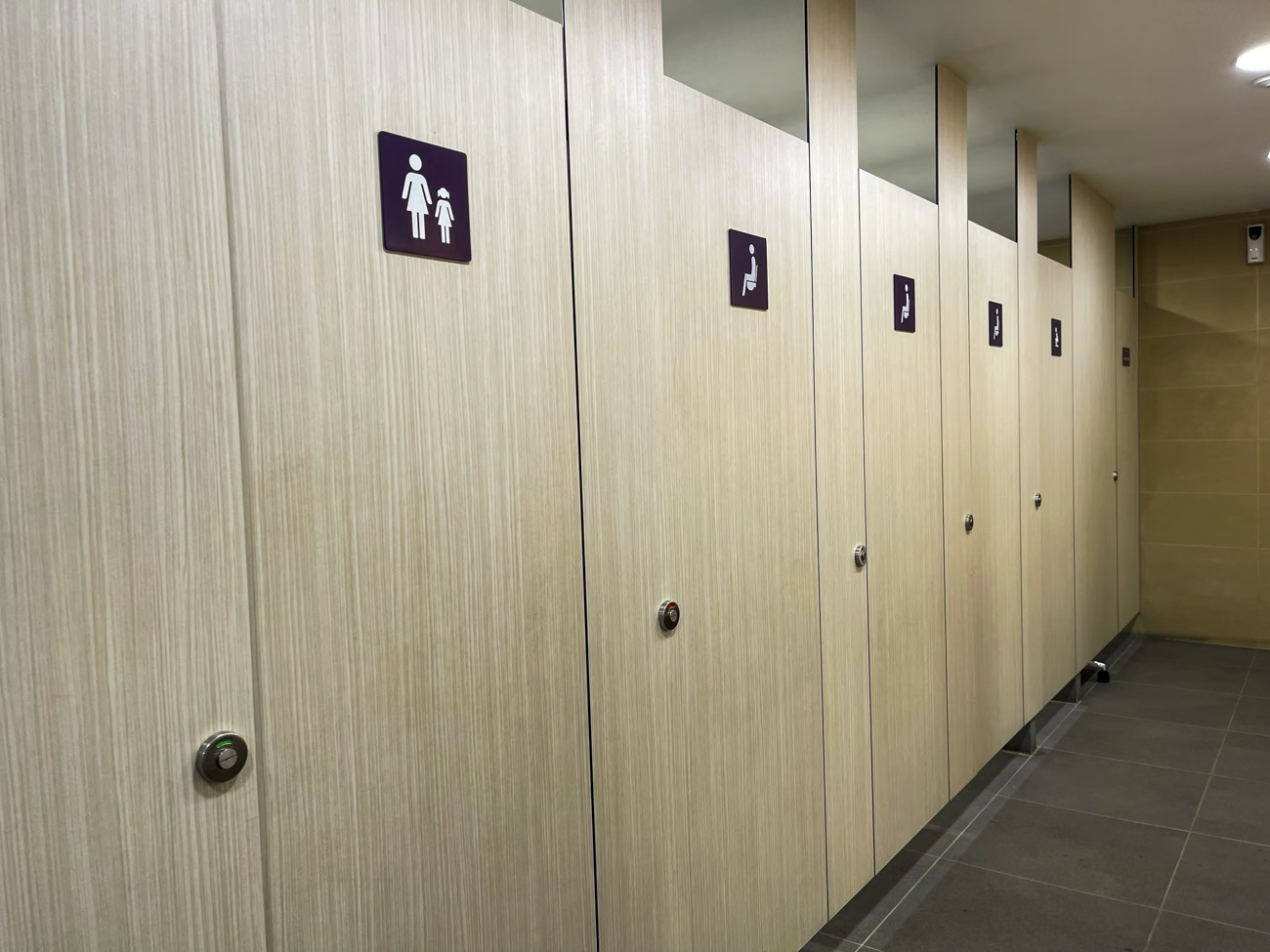
Public Restroom Etiquette & Hygiene Standards
First, the good news. Public toilets in Singapore are often a huge comfort, especially when you’re out exploring all day. In most shopping malls (like the ones lining Orchard Road) and hotels, you’ll find they are exceptionally clean and well-maintained.
The Famous Flushing Law
You may have heard it’s an offense not to flush a public toilet after using it. This is true.
While you might not see uniformed “toilet police,” this law is enforced. Don’t be surprised to see plainclothes officers from the National Environment Agency (NEA) conducting routine checks, especially in busy public places like hawker centres.
Forgetting to flush isn’t just impolite; it’s considered a public health hazard in such a dense city. It’s a simple act of courtesy that keeps the space comfortable for the next person, and failing to do so can result in an on-the-spot fine of SGD$150.
Our Hyper-Specific Toilet Paper Tip
Here’s a little tip we’ve learned:
Finally, it’s expected to just keep the space tidy. This means not squatting on the toilet seats (if there are footprints, it’s a sign this has been an issue) or leaving water all over the floor.
A Serious Warning on Public Urination
This brings us to a very serious point, and it’s one we want to be crystal clear about, especially for visitors enjoying Singapore’s nightlife.
We’ve all seen stories of people getting drunk in a new city and doing “funny things” like urinating in public. In Singapore, this is not a funny story or a minor offense. It is a major public order offense with severe consequences.
Singaporean authorities do not take this lightly, and being intoxicated is not an excuse. This isn’t just about tidiness; it’s seen as a deep sign of disrespect for public spaces and the people who share them. The fine can go up to SGD$1,000.
To understand how seriously this is taken: in the past, many public elevators (“lifts”) were famously fitted with Urine Detection Devices (UDDs). These high-tech systems could detect the scent of urine, lock the lift doors, and sound an alarm until the police arrived.
Our advice here is simple: please do not be playful with this rule. It’s a non-negotiable part of what keeps the city so comfortable and clean for everyone.
A Final Reassurance for Your Trip
As you can see, these rules aren’t scary. They’re just simple, mindful habits that all add up to create the wonderfully clean and comfortable Singapore that visitors, including us, love.
Our final advice is not to be paranoid, just be aware. By being a little mindful, you’ll blend right in and enjoy a completely stress-free visit.
Knowing these cleanliness rules is a great start. This article focuses on littering and public toilets, but for a comfortable trip, you’ll also want to know the specific rules for eating and drinking on the MRT and the famous laws on chewing gum. For a complete overview of all important laws, including those on alcohol and smoking, check out our primary Singapore Laws for Tourists hub.