Have you ever noticed how surprisingly calm Singapore feels? For a bustling metropolis with millions of people, there is a distinct lack of chaos. The streets are orderly, the trains are quiet, and people seem to move around each other with an easy grace.
This isn’t an accident. It is the result of a deep-seated national value: Social Harmony.
To us locals, this concept is the “invisible software” that runs our city. It’s what allows people from four major cultures and countless religions to live side-by-side in a space smaller than New York City.
For you as a traveler, these rules aren’t restrictions designed to limit your fun. Think of them as a “shared language of respect.” When everyone speaks this language, it creates a stress-free environment where you don’t have to worry about harassment, aggression, or unpredictable behavior.
By understanding three core pillars—Race & Religion, Noise, and Modesty—you can stop feeling like an outsider walking on eggshells. Instead, you’ll feel like a confident, respectful guest who knows exactly how to blend in.

The Foundation: Respectful Speech & Social Harmony
Singapore is a true melting pot. Walking down a single street, you might pass a Chinese temple, a Hindu gopuram, a Muslim mosque, and a Christian church, all sitting harmoniously side-by-side.
This harmony is the bedrock of our nation. Because our population is so diverse—comprising Chinese, Malay, Indian, and Eurasian communities—we take Multiracialism very seriously. It’s not just a nice idea; it’s a survival strategy.
The Laws You Need to Know
To protect this peace, we have strict laws, most notably the Maintenance of Religious Harmony Act and the Penal Code. However, the expectation of “harmony” goes far beyond just religion.
- Zero Tolerance for Racism: While we value free speech, words that wound the racial or religious feelings of another group are considered a criminal offense. This applies to everyone. Making racist comments about anyone—whether a Singaporean, a fellow tourist, or a migrant domestic worker—is taken very seriously by the authorities.
- Gender & Dignity: Respectful conduct also extends to gender. Singapore has strengthened its laws regarding online safety and harassment. Comments that incite violence against women, constitute sexual harassment, or degrade a person’s dignity can lead to legal trouble.
- Online Falsehoods (Fake News): Be very careful about what you share online. Under the Protection from Online Falsehoods and Manipulation Act (POFMA), the government has the power to act against online falsehoods that affect the public interest. If you post content that the government deems to be a false statement of fact—even if it is about government policies—authorities can order social media platforms to correct or disable access to your post.
A Crucial Tip for Modern Travelers: These laws apply strictly to the digital world. Posting inflammatory comments, racist slurs, or verified falsehoods on social media while you are in Singapore can lead to investigation. We advise keeping your online presence as respectful and factual as your offline behavior.
Discrimination as a Social Offense
While a tourist is less likely to break a specific law for general discrimination (unlike for a direct racial or religious insult), it’s important to understand that such behavior goes against the very grain of our society.
Treating anyone differently or making derogatory remarks based on their gender, age, nationality, or background will be met with strong public disapproval. While it may not lead to an arrest, it is a serious breach of social etiquette and will make for a very uncomfortable and unpleasant experience.
Fellow Traveler Advice
The Comfort Benefit: This strictness is exactly why you will rarely feel unsafe or unwelcome here based on your background. It guarantees a safe, neutral space for everyone to enjoy.
Public Order: Zero Tolerance for “Pranks” & Disruption
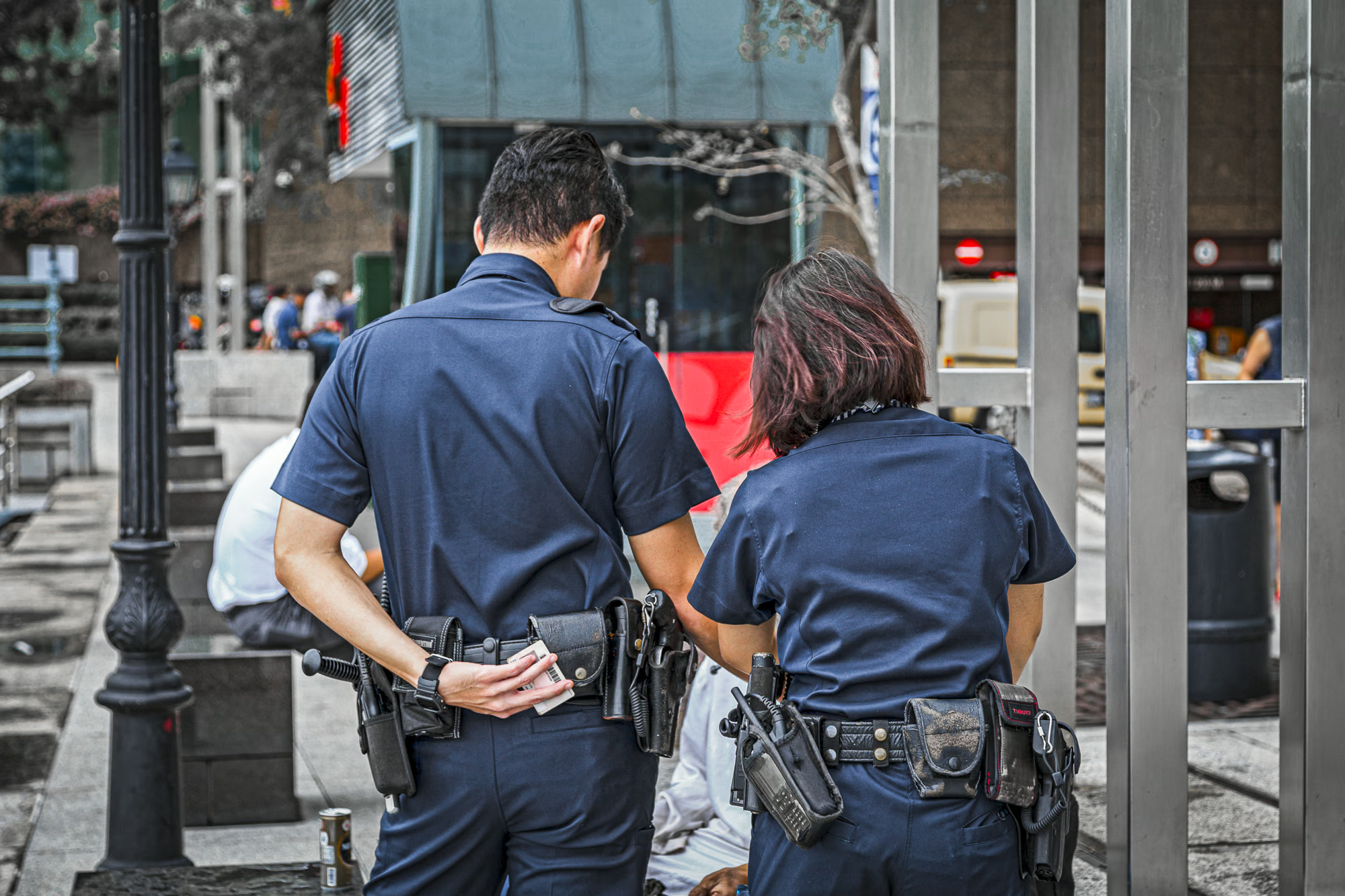
In many countries, rushing a stage, “trolling” a public event, or pulling a prank for social media might result in a slap on the wrist or being asked to leave. In Singapore, this is treated as a severe criminal offense.
The government places a premium on public order and security. Any action that disrupts this order—whether it is “just a joke” or “for content”—is dealt with swiftly and harshly.
A Real-World Warning
In a recent high-profile case, a foreign tourist rushed towards a celebrity at a movie premiere to create a “prank” video. The consequences were immediate and severe: he was arrested for criminal trespass, sentenced to jail, deported after serving his sentence, and barred from re-entering Singapore.
The Takeaway:
How Strict Are Singapore’s Noise and Public Disturbance Laws?
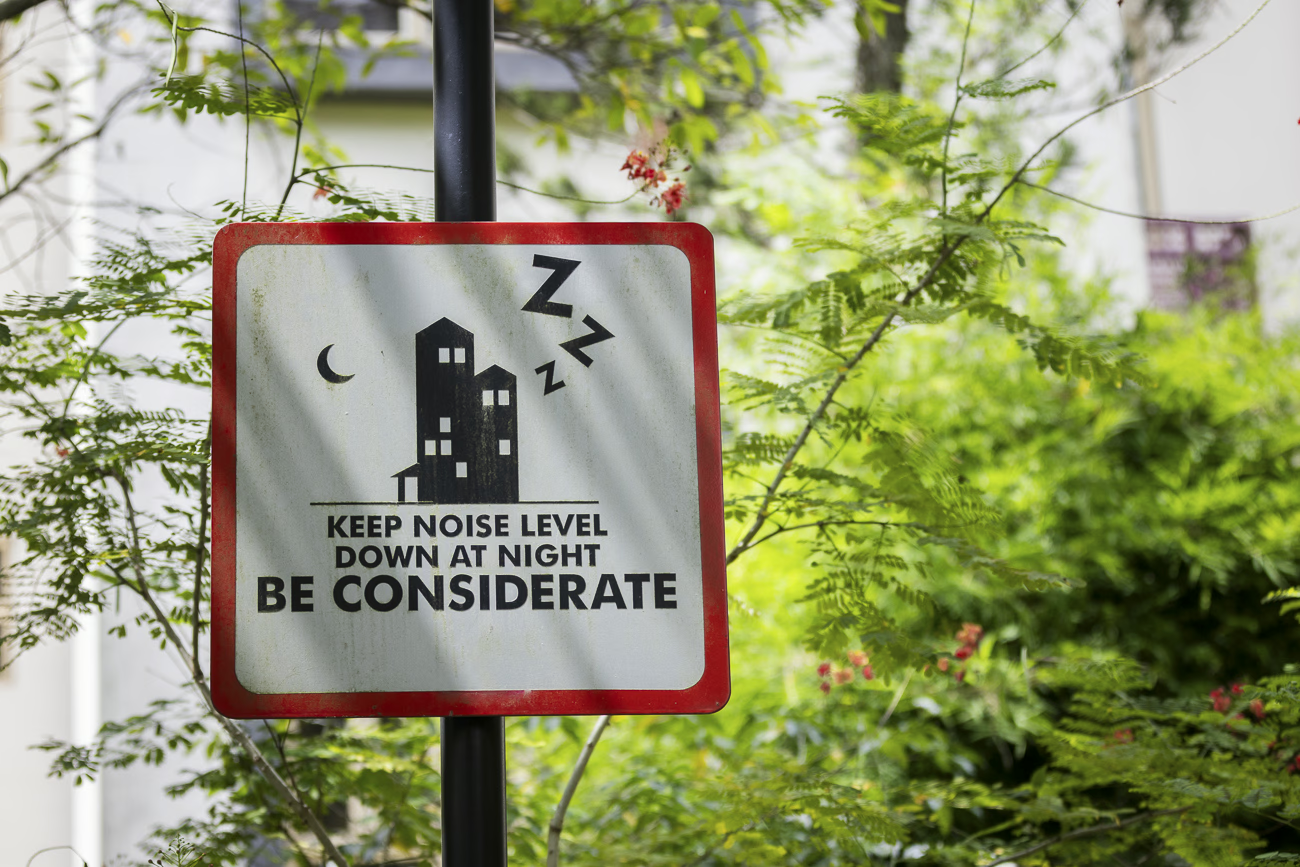
Understanding Singapore’s noise regulations is less about specific decibel levels and more about context, location, and behavior. An activity that is perfectly acceptable in one place can be a legal offense in another.
The Golden Rule: Location Matters Most
What is considered acceptable noise depends entirely on where you are at that specific moment.
When Noise Becomes a Clear Offense (Regardless of Location)
While location is key, some behaviors are considered disorderly and are illegal anywhere in Singapore.
In Nutshell
As long as your behavior isn’t aggressive, rowdy, or disorderly, you are very unlikely to face any legal trouble. The law primarily targets disruptive and antisocial conduct.
For everything else, the most important rule is simply to be considerate. Keep your voices and music at a reasonable volume, especially when you are in or near a residential area after 10:30 pm. If you are a considerate guest, you will be absolutely fine.

Modesty & Personal Boundaries
Singapore is a hyper-modern city, but at its heart, it remains socially conservative. Respecting physical boundaries is one of the most important ways to ensure a comfortable trip.
The “Outrage of Modesty” Law
In Singapore, we have a specific legal term called “Outrage of Modesty.” This refers to any unwanted physical touch of a sexual nature.
The Trap for Tourists: This is where cultural differences can cause issues. In some cultures, a friendly pat on the waist or a hand on the lower back in a crowded bar might be seen as casual flirting. In Singapore, this is a red line. If the touch is unwelcome, it can be viewed as a criminal offense.
Our Advice: Keep your hands to yourself. Always err on the side of formal politeness. Do not assume familiarity with strangers. It is the safest and most respectful way to interact.
Public Nudity & The “Hotel Room” Rule
Most travelers know that walking down the street naked is illegal. But Singapore has a specific nuance to this law that catches people off guard.

The Unwritten Rules of Daily Life
Beyond the laws, there are social habits that bind our community together. Adopting these small behaviors is the quickest way to transition from “tourist” to “insider.”
The “Uncle” & “Auntie” Connection
You will often hear locals addressing taxi drivers, cleaning staff, or hawker stall owners as “Uncle” or “Auntie.”
The Culture of Queuing
Singaporeans will queue for everything—from the latest iPhone to a good bowl of noodles.
“Chope-ing” (Reserving with Trust)
In a busy food court, you might see a packet of tissues or an umbrella sitting alone on an empty table.

Ready to Blend In?
Singapore’s rules might sound strict on paper, but in practice, they are simply guidelines for being a considerate neighbor. We believe that by respecting our racial harmony, keeping the volume down in shared spaces, and honoring personal modesty, you are actively helping to maintain the very atmosphere that makes this city so relaxing.
While adapting to these social habits is part of the fun, feeling completely at ease often requires understanding the wider Singapore regulations for tourists that protect this unique environment. Seeing the full legal picture ensures that every interaction you have—from the streets to sacred spaces—is grounded in certainty rather than guesswork.
You don’t need to be anxious about making a mistake; if you act with the same kindness you would want for yourself, you will fit right in. To clear up any lingering doubts about dress codes or photography, we have answered the most common practical questions below so you can explore with total peace of mind.
Common Questions to Help You Prepare
What should I wear when visiting a temple or mosque?
Modesty is essential when visiting any place of worship in Singapore, such as a temple, mosque, or church. The general expectation is for both men and women to cover their shoulders and knees. This shows respect for the sacred space and the worshippers. While many major places of worship are accustomed to tourists and will kindly provide a shawl or robe for temporary use if you are underdressed, it’s far more comfortable and considerate to arrive prepared with appropriate attire.
Can I kiss or hold hands with my partner in public?
Public displays of affection are generally conservative in Singapore. Simple gestures like hand-holding while walking and a quick peck on the cheek are considered perfectly acceptable and normal social behavior. However, prolonged kissing, intimate embracing, or intense displays of affection are generally frowned upon by the public and considered impolite or inappropriate. The best approach is to keep any romantic gestures modest and respectful of the local environment to ensure you blend in comfortably.
Can I take photos of people praying?
It is strongly advised to refrain from taking photos of people while they are actively praying or engaged in religious rituals. While you may be in a public space, capturing an image of someone in such a personal and sacred moment is widely seen as intrusive and deeply disrespectful. It is a fundamental breach of social etiquette. Always seek explicit permission first if you feel you must take the photo, but a better and safer approach is to direct your camera toward the beautiful architecture, artwork, or exterior of the place of worship instead.
Can I take photos of others in public?
Photographing general street scenes, crowds, and public life is perfectly fine, as is the case in most major cities. However, you should exercise caution when focusing on specific individuals. Singapore enforces strict laws against harassment and stalking. If you persist in photographing a particular person after they have clearly indicated they are uncomfortable, or if your actions make them feel distressed, you could be deemed to be engaging in unlawful stalking. Always be respectful of a person’s privacy and immediately stop taking their picture if they signal “no” or appear to be uncomfortable.
Can I wear a bikini at the hotel pool?
Yes, absolutely, wearing a bikini or standard swimwear is perfectly acceptable at designated areas like a hotel pool, a resort, or a public beach like Sentosa. However, the rule of thumb is to cover up when moving out of the immediate swimming area. Before walking through your hotel lobby, entering a restaurant, or stepping into any public shopping or residential space, you should always put on a shirt, sarong, or other cover-up. This is considered basic public decency and respect for non-beach/pool environments.
Will I get in trouble for posting an opinion online?
You are certainly free to share your personal travel experiences, photos, and general opinions online. However, it is vital to remember that the strict laws protecting Singapore’s social harmony apply equally to the digital world. You must avoid posting content that incites racial or religious hatred toward any community. Furthermore, be very careful about sharing “fake news” or false statements of fact that could cause public alarm or distrust in institutions. Under the Protection from Online Falsehoods and Manipulation Act (POFMA), the government can take action against such posts, which may lead to legal issues.
Never Miss an Update
Add yourcomforttrip.com as a Preferred Source on Google to see more of my content in AI Mode and AI Overviews.