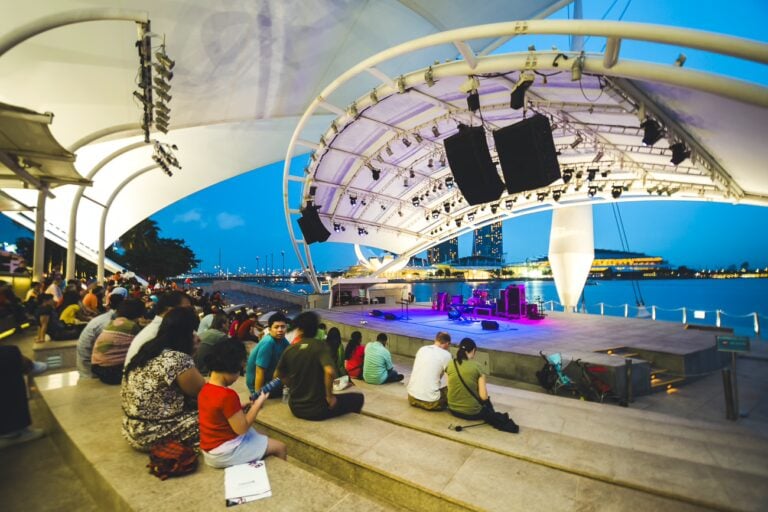
You have seen the photos. The glowing Supertrees. The infinity pool in the sky. The spotless streets. Singapore looks like the perfect, stress-free escape. But no one tells you on Instagram, even in paradise, that things can get stressful.
The tropical humidity hits you the moment you step outside. Strict local laws can make you nervous about making a mistake. You can easily go from “relaxed tourist” to “anxious offender” in about five minutes. And nothing ruins a luxury trip faster than being the person stuck at the airport immigration because you forgot one simple digital form.
We believe a vacation should actually feel like a vacation. We believe your holiday should feel effortless from the moment you step off the plane.
You shouldn’t have to waste time on boring logistics or worry about doing the wrong thing. You shouldn’t have to worry about accidentally breaking a rule, getting stuck in immigration lines, or sweating through your clothes because you packed the wrong clothes.
Think of this as your cheat sheet. Here are some essential things to know before visiting Singapore to ensure your trip is smooth, safe, and completely comfortable.
Note: This page has affiliate links. We earn a commission at no cost to you. See our policy for more details.

Entry Requirements & The SG Arrival Card
Most travelers do not need a visa for short visits. Holders of US, UK, Australian, and EU passports can typically enter visa-free for up to 90 days.
However, everyone must complete one critical step to enter the country.
You must fill out the SG Arrival Card (SGAC) before you board your flight. This is not a physical card. It is a digital form that you submit online, and you can do this up to three days before you arrive.
Singapore has some of the world’s most advanced automated immigration lanes. If you have your SG Arrival Card ready and carry only hand luggage, you can often walk off the plane, scan your passport, and be in a taxi within 20 minutes. Note that if you have checked baggage, you will need to wait for the carousel, which typically adds another 15-20 minutes.
We highly recommend doing this from home on your phone. If you forget, you will have to stand in a manual queue at the airport to fill it out while prepared travelers breeze past you.
Weather, Best Time to Visit & Packing Strategy
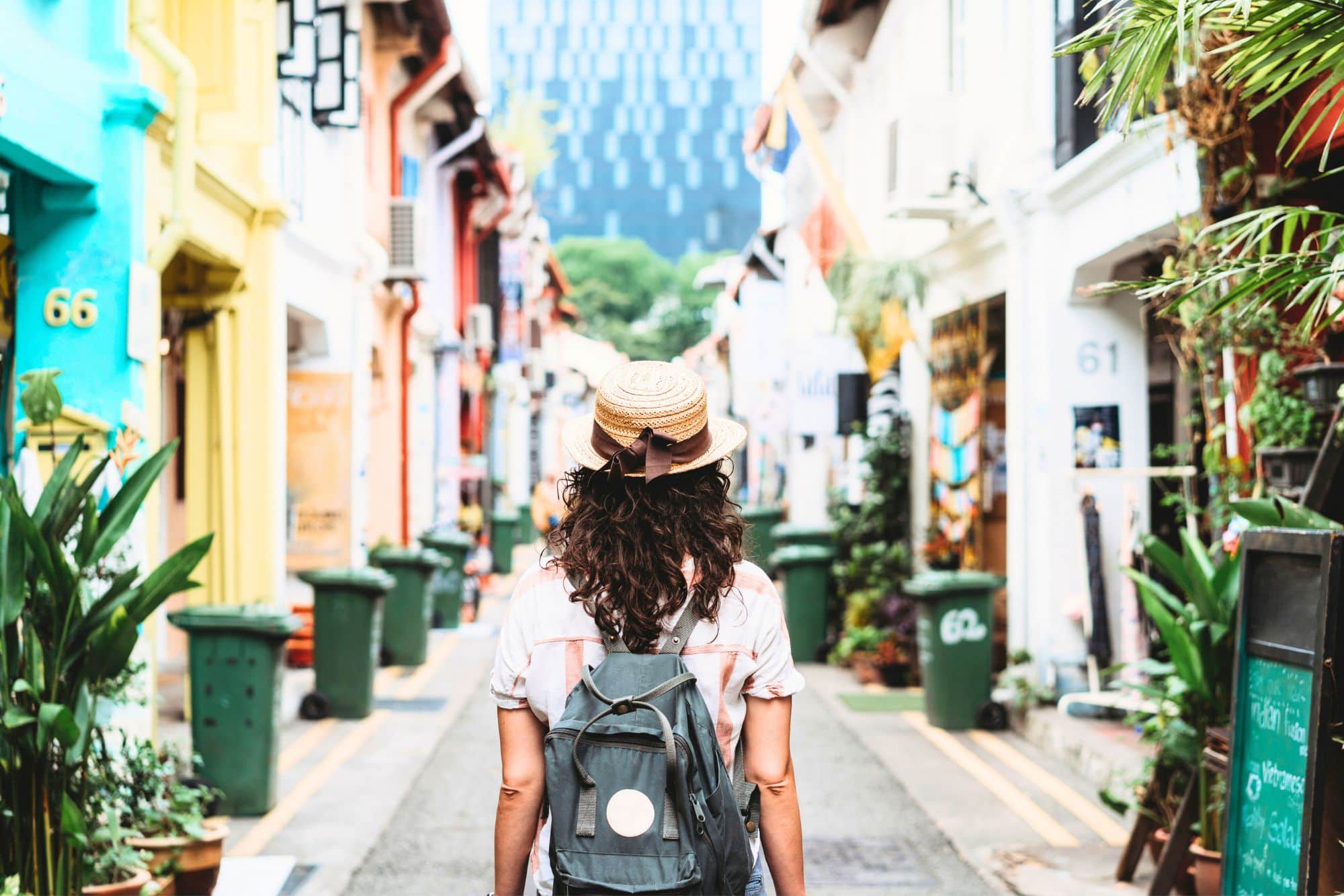
Singapore is hot and humid year-round, with temperatures rarely dropping below 31°C (88°F). The “best time” to visit is strictly about avoiding the wettest monsoon months (November to January).
We believe true comfort is physical. In Singapore, humidity is the enemy of looking and feeling good. You don’t need to overpack; you just need to pack the right fabrics.
Currency, Cashless Payments & Tipping Culture
The local currency is the Singapore Dollar (SGD). While cash is still used, the city has largely shifted to a digital-first economy.
Payment Methods in Singapore
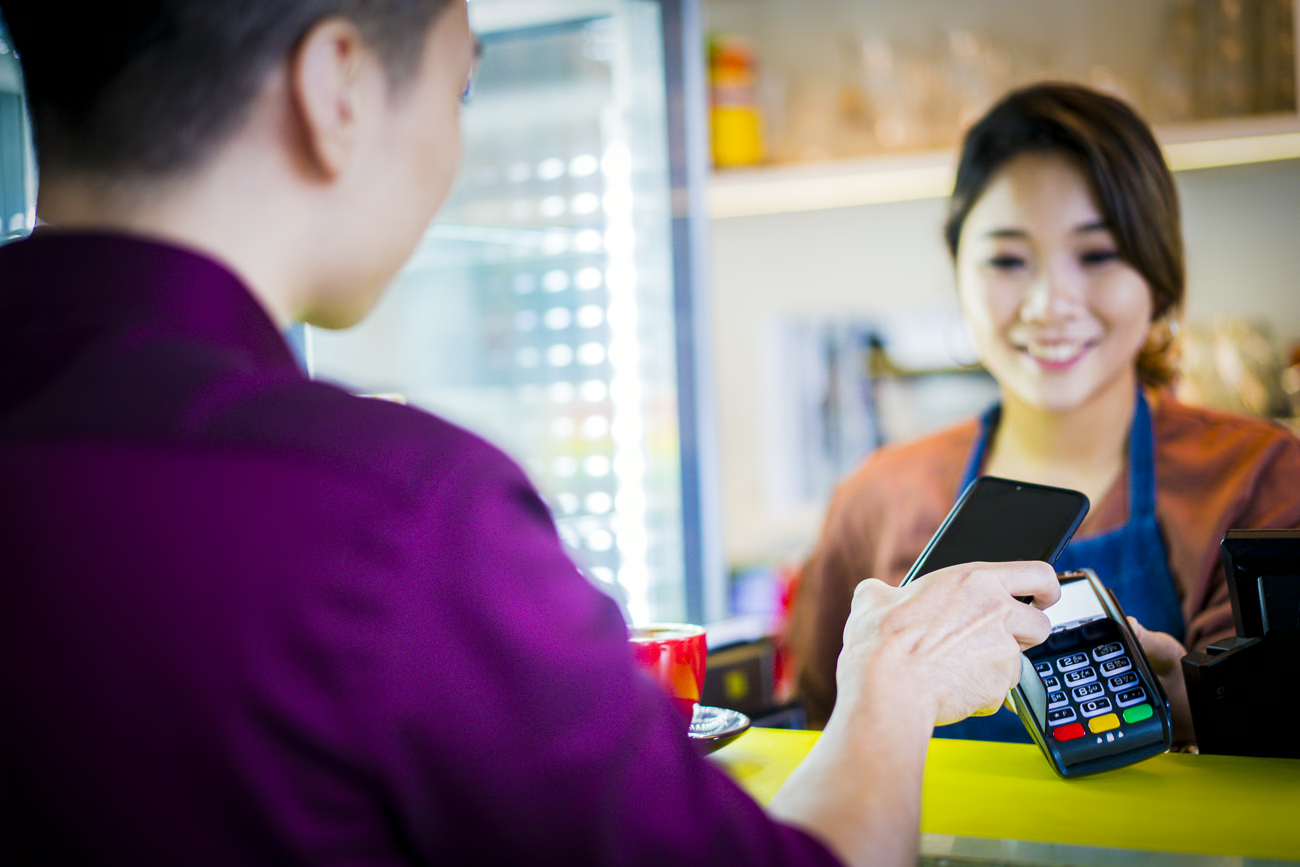
You can use your credit card (Visa/Mastercard) or smartphone (Apple Pay/Google Pay) for almost everything—from luxury dining and shopping to riding the MRT.
However, there is one major exception that luxury travelers often overlook. You still need cash for Hawker Centres (local food courts) and some small, old-school “mom-and-pop” shops. Do not miss out on the world’s best street food just because you didn’t have a SGD$5 note. We recommend keeping a small amount of cash (SGD$50 – SGD$100) in your wallet, just in case.
If you run out of notes, you can easily withdraw more at any of the ATMs found throughout the city. While accessing cash is simple, understanding the various payment methods in Singapore is important to ensure a stress-free trip.
Tipping is Not Required
This is often the biggest relief for visitors from the US. You do not need to calculate 15% or 20% at the end of a meal. Most restaurants automatically add a 10% Service Charge to the bill (you will see this marked as ++ on the menu). Additional tipping is purely optional and not expected.
Connectivity: eSIMs, WiFi & Power Adapters
The fastest and easiest way to get connected online is by purchasing a travel eSIM before you even board your flight.
Internet Connections
We highly recommend avoiding the airport queue to buy a physical SIM card. An eSIM allows you to land and instantly hail a Grab (Singapore’s Uber) without stress. While free public WiFi (Wireless@SGx) is available in malls, it often involves navigating clunky login portals, and connection speeds can be inconsistent. For seamless navigation and booking rides, reliable mobile data is non-negotiable.
Power & Voltage Safety
Singapore uses the “Type G” outlet (the British rectangular 3-pin style) running on 230V.

How to Get Around Singapore (Without a Car)
Do not rent a car. Renting a car in Singapore creates unnecessary stress due to high costs, confusing routes, and difficult parking.
For the luxury traveler, true freedom here means being chauffeured, not driving yourself. The most comfortable strategy is to rely on Grab (Southeast Asia’s Uber) for door-to-door service and the MRT (Subway) to beat peak-hour traffic.
The “Door-to-Door” Luxury
We highly recommend downloading the Grab App before you arrive. It is safe, cashless, and reliable. You can book anything from a standard sedan to a premium 6-seater for your family, ensuring you never have to wait in the heat or haggle with a taxi driver.
The MRT Experience
Forget what you know about subways in other major cities. Singapore’s MRT system is spotless, air-conditioned, and efficient. It is often the fastest way to cross town during rush hour without sacrificing comfort. There is no need to buy a ticket or a transport card. Simply tap your own Visa or Mastercard (or Apple Pay/Google Pay) directly at the fare gate to enter and exit, for a contactless payment.
Airport Transfer
Your arrival at Changi Airport should be seamless. You can easily book a Grab or hop into a Taxi within minutes of landing if you are not waiting to collect any check-in luggage.

Health, Safety & Emergency Essentials
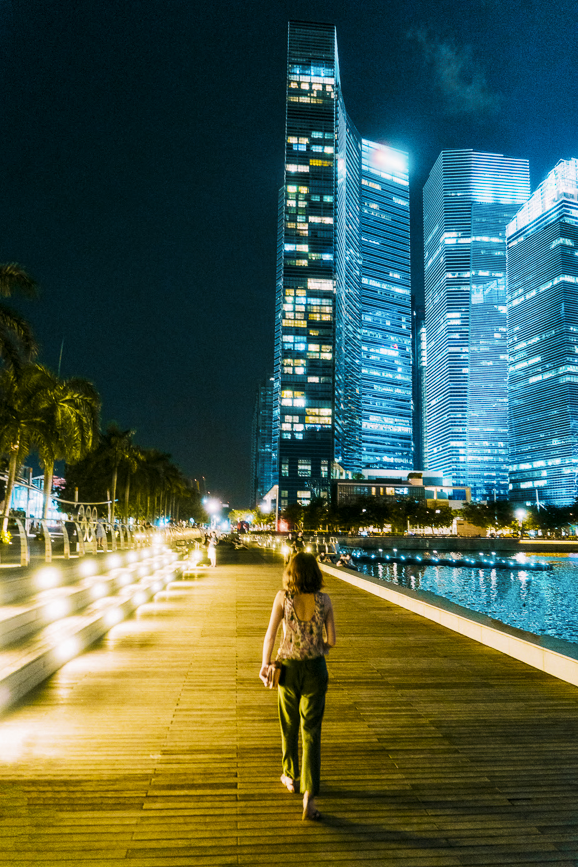
Singapore is one of the safest cities in the world. Walking alone at night is exceptionally safe, and the water from the tap is perfectly clean.
We believe the biggest luxury Singapore offers is peace of mind. You do not need to clutch your bag tightly or worry about accidentally stumbling into a “bad neighborhood” because they effectively don’t exist here.
Restroom Comfort (Public Toilets)
For many travelers, the anxiety of finding a clean restroom is real.
Drinking Water & Food Hygiene
Tropical Awareness: Mosquitoes
While Singapore is malaria-free, Dengue Fever is a tropical reality here. Cases can spike during the warmer months, but they are easily managed with simple awareness.
If you are planning to visit nature reserves (like the Botanic Gardens or the Zoo), applying insect repellent is your best defense. For general city exploring and shopping in malls, this is rarely a concern.
Medical & Travel Insurance
While Singapore is safe, accidents happen.
Emergency Numbers (Save These)
In the unlikely event you need help, Singapore’s emergency services are world-class, with response times that rival the best in the US and UK.
Language & Local Etiquette
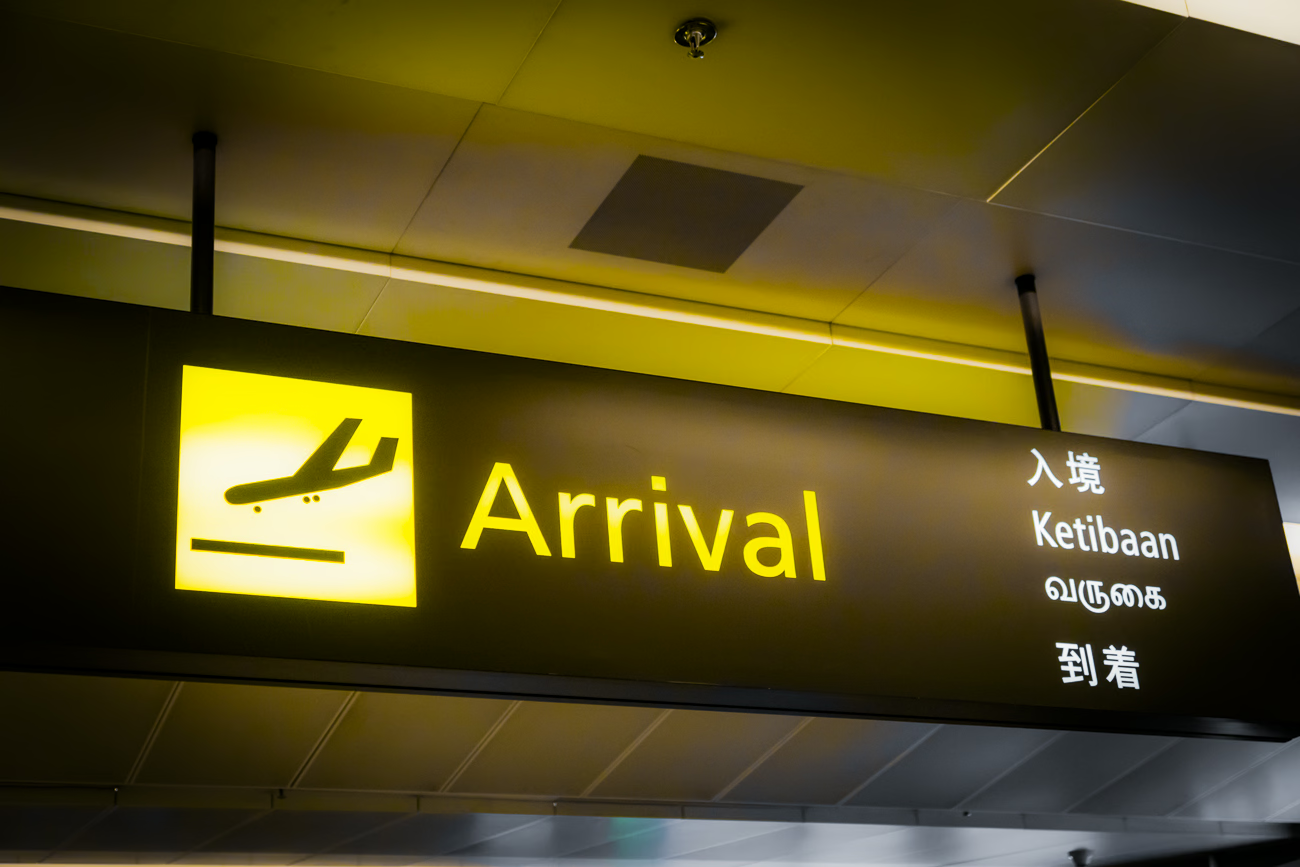
One of the greatest comforts for visitors is the language. Unlike many other destinations in Asia, English is the main working language. You can order food, read signs, and ask for directions without any barrier.
However, you will hear locals speaking “Singlish”—a colorful, rapid-fire blend of English, Malay, Hokkien, and Cantonese. Words like “Lah,” “Leh,” and “Lor” are added for emphasis. Don’t worry; you aren’t expected to speak it, but knowing it exists helps you tune into the local rhythm.
How to Blend In: Escalators & “Choping”
To blend in effortlessly, there are two unwritten rules of the city:
- Escalator Etiquette: We value efficiency. Always stand on the left and walk on the right. Standing on the right during rush hour will earn you impatient sighs from rushing commuters.
- The “Chope” Culture: If you see a packet of tissue paper on an empty table at a hawker centre, do not sit there. That seat has been “Choped” (reserved). This is the local way of saving a seat while queuing for food.
The Dining Landscape: Michelin Stars & Hawkers
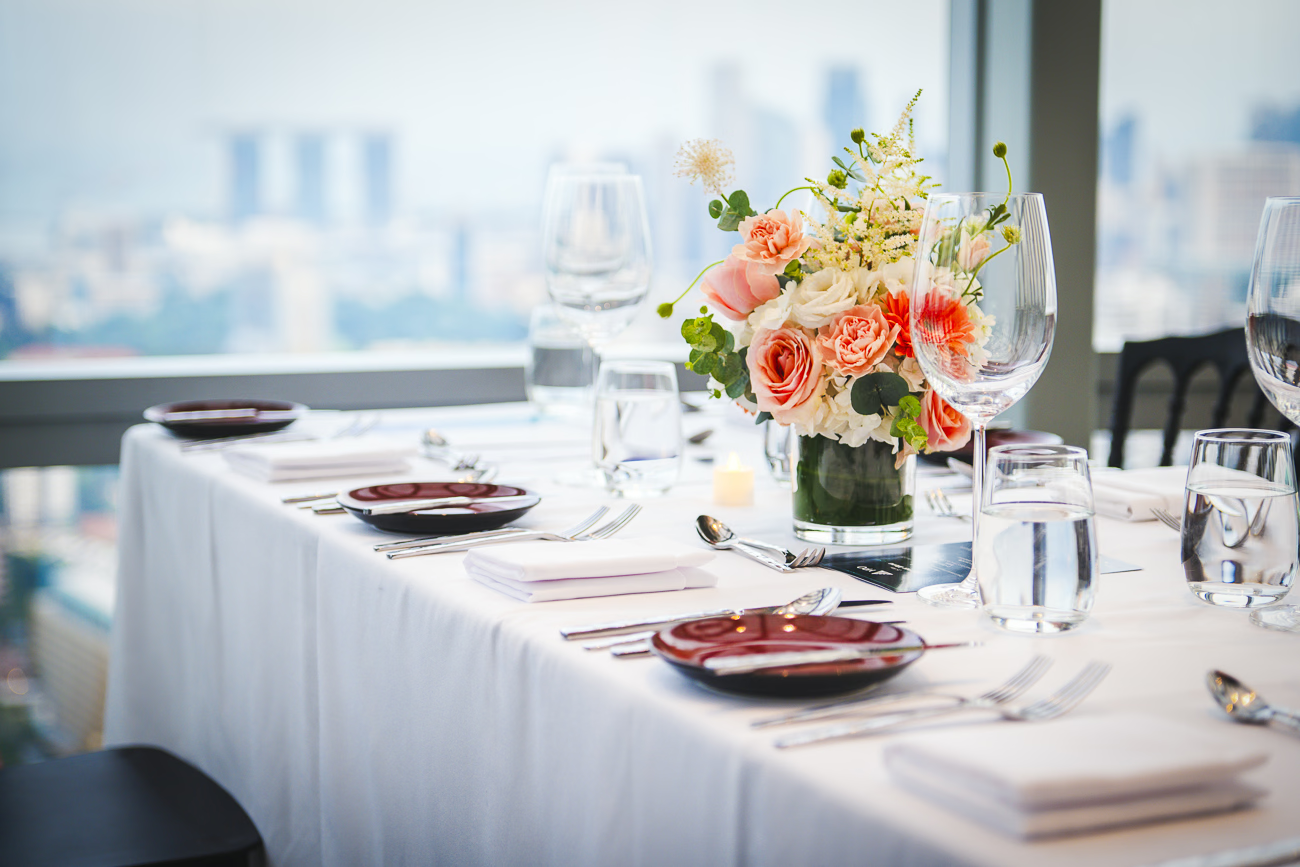
Singapore is unique because the best food isn’t always in the most expensive places. We believe the true “Comfort Trip” experience involves mixing the high-end with the hyper-local.
The “High-Low” Mix
It is common to have a $5 plate of Chicken Rice for lunch at a Hawker Centre (open-air food court) and a $300 fine-dining meal for dinner. Do not be afraid of the hawker centres; they are the heart of our culture.
Hygiene Grades (The “ABC” System)
If you are worried about “street food” safety, look for the placard displayed at every stall.
Reservations are Essential
For popular restaurants (especially Chili Crab spots or rooftop dining), walking in is rarely an option. To avoid disappointment/standing in line, we recommend booking your table at least 2 weeks in advance.

City Rhythm: Business Hours & Dress Codes
To ensure your itinerary flows smoothly, you need to sync your schedule with the city’s rhythm.
The “Late Start” Culture
Unlike cities in Europe or Australia that wake up early, Singapore starts late. Most shopping malls and major attractions do not open until 10:00 AM or 11:00 AM.
The “Rush Hour” Avoidance (Pace & Crowds)
Singapore is a fast-paced city that moves with clockwork efficiency. However, the morning rush (8:00 AM – 9:30 AM) and evening rush (6:00 PM – 7:30 PM) can be intense.
The “Shorts” Trap (Evening Dress Code)
Because of the heat, you will want to wear shorts and flip-flops everywhere. While this is fine for daytime sightseeing, it is a major trap for the evening.
Public Holidays & Weekends
Singapore is a multicultural hub that celebrates holidays from four major religions. If you visit during Chinese New Year (usually Jan/Feb) or Hari Raya, expect many local shops to close, while major malls remain open but crowded. A quick check of the public holiday calendar before you book can save you from unexpected closures.
Accessibility & Family Comfort
If you are traveling with a stroller, wheelchair, or just heavy luggage, Singapore is arguably the most accessible city in Asia.
Singapore Laws: Chewing Gum & The “Fine” City
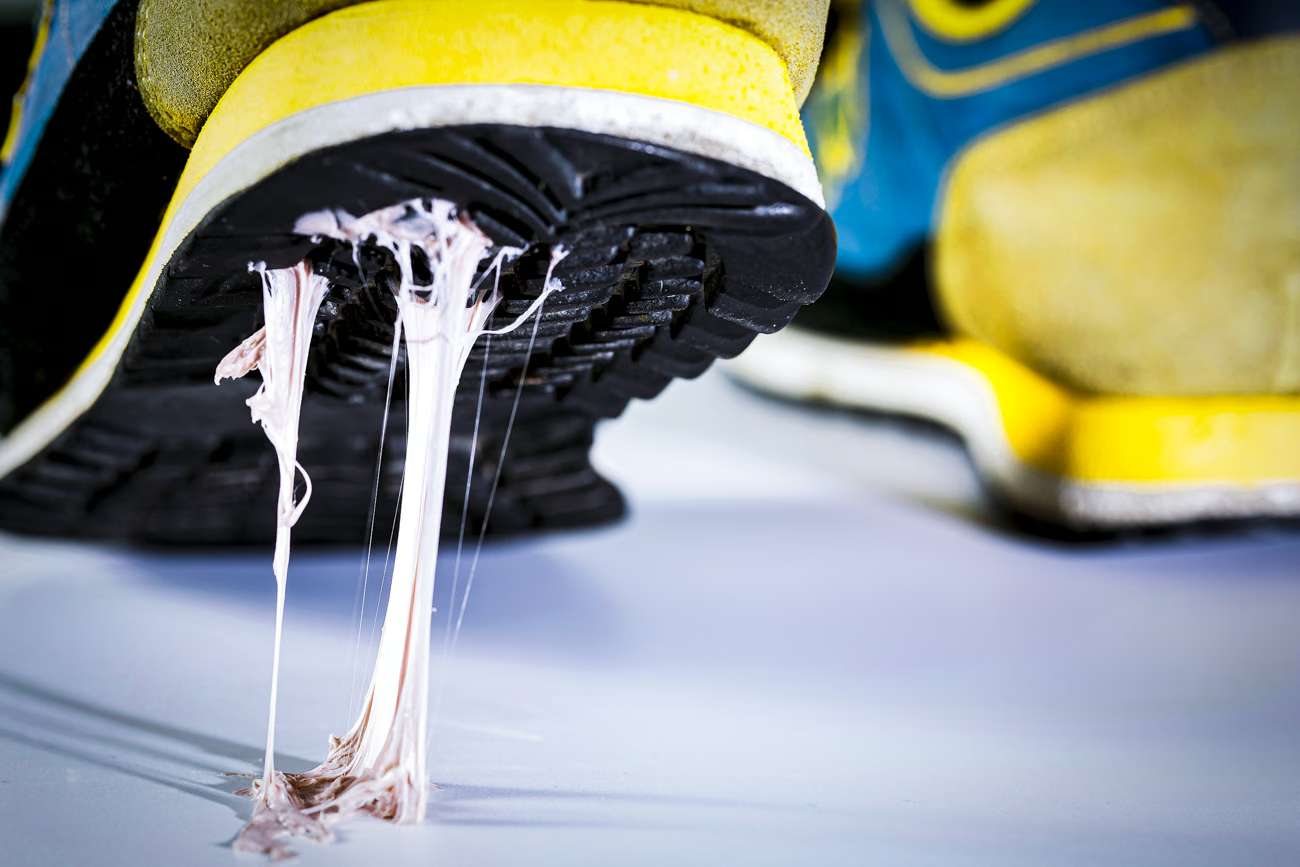
Singapore has a reputation for strict rules, and the most famous rumor is undoubtedly the ban on chewing gum. Let’s clear this up immediately so you can relax: You will not be arrested for chewing gum.
The law actually prohibits the import and sale of gum, not the act of chewing it. As long as you don’t sell it or spit it out on the pavement, you are fine.
However, while the gum story is largely a myth, the “Fine City” reputation exists for a reason. There are strict penalties for behaviors that disrupt public comfort. Instead of worrying about gum, here are some laws you actually need to watch out for.
Vaping Trap (Critical)
This is the number one law visitors unknowingly break. Electronic cigarettes and vapes are completely illegal in Singapore. You cannot bring them into the country, and you cannot use them in your hotel room. If you are caught with a vape at customs or on the street, it will be confiscated, and you will face a steep fine. Leave it at home.
“Clean City” Etiquette
Singapore is spotless because strict rules protect everyone’s comfort. You will face fines for littering (even dropping a cigarette butt), spitting, or eating and drinking on the MRT trains. That “No Eating” sign in the subway is not a suggestion; take a sip of water on the platform, not in the carriage.
10:30 PM Alcohol Curfew
You cannot buy alcohol after 10:30 PM from convenience stores (like 7-Eleven) or supermarkets. You also cannot drink in public spaces, such as parks or bridges, after this time. If you want a late-night drink, you must go to a licensed bar or restaurant.
A Note on Zero Tolerance
Finally, be aware that Singapore has zero tolerance for drug offenses, with extremely severe penalties, including the death penalty, for trafficking. This is a boundary that should never be tested.
Most rules here are simply about common courtesy, but navigating the nuances of Singapore’s strict local laws ensures you never accidentally cross a line or face a stressful fine.
Final Thoughts: Your Comfort Trip Begins Now
You now have the “Survival Kit” for Singapore. By handling these logistics before you fly, you have bought yourself the ultimate luxury: mental space. Instead of worrying about fines, SIM cards, or finding a clean toilet, you can land at Changi Airport and simply enjoy the moment.
These essentials are just the foundation. Now that the logistics are handled, you can safely shift your focus toward the actual experience of planning a comfortable trip to Singapore, from booking the quietest hotels to securing reservations at the city’s finest restaurants.
Never Miss an Update
Add yourcomforttrip.com as a Preferred Source on Google to see more of my content in AI Mode and AI Overviews.