
The land crossing between Singapore and Malaysia is one of the busiest and most vibrant travel corridors in the world. Whether you are a traveler entering Singapore for the first time via Johor Bahru, a tourist in Singapore planning a day trip across the Causeway, or a local driving up for a weekend escape, this border connects two incredible experiences.
However, navigating the checkpoints at Woodlands or Tuas can be intimidating. Strict rules are enforced at the border, especially regarding entry and exit procedures. These regulations are rigorously applied and can differ significantly depending on your direction of travel and your mode of transport.
What applies to a pedestrian catching a bus may not apply to a driver behind the wheel. The regulations for leaving Singapore (such as fuel tank limits) are just as critical as the customs laws for entering Singapore (such as tax allowances and prohibited items). A misunderstanding in either direction can lead to fines, delays, or the confiscation of goods.
We created this guide to simplify these complexities for every type of traveler. Whether you are crossing by car, bus, train, or on foot, we have mapped out the essential “need-to-knows” for both sides of the border.
Our goal is to replace confusion with clarity. By understanding the specific rules for your journey, you can navigate the immigration lines with confidence and focus on enjoying the trip ahead.
Introduction to Border Crossing
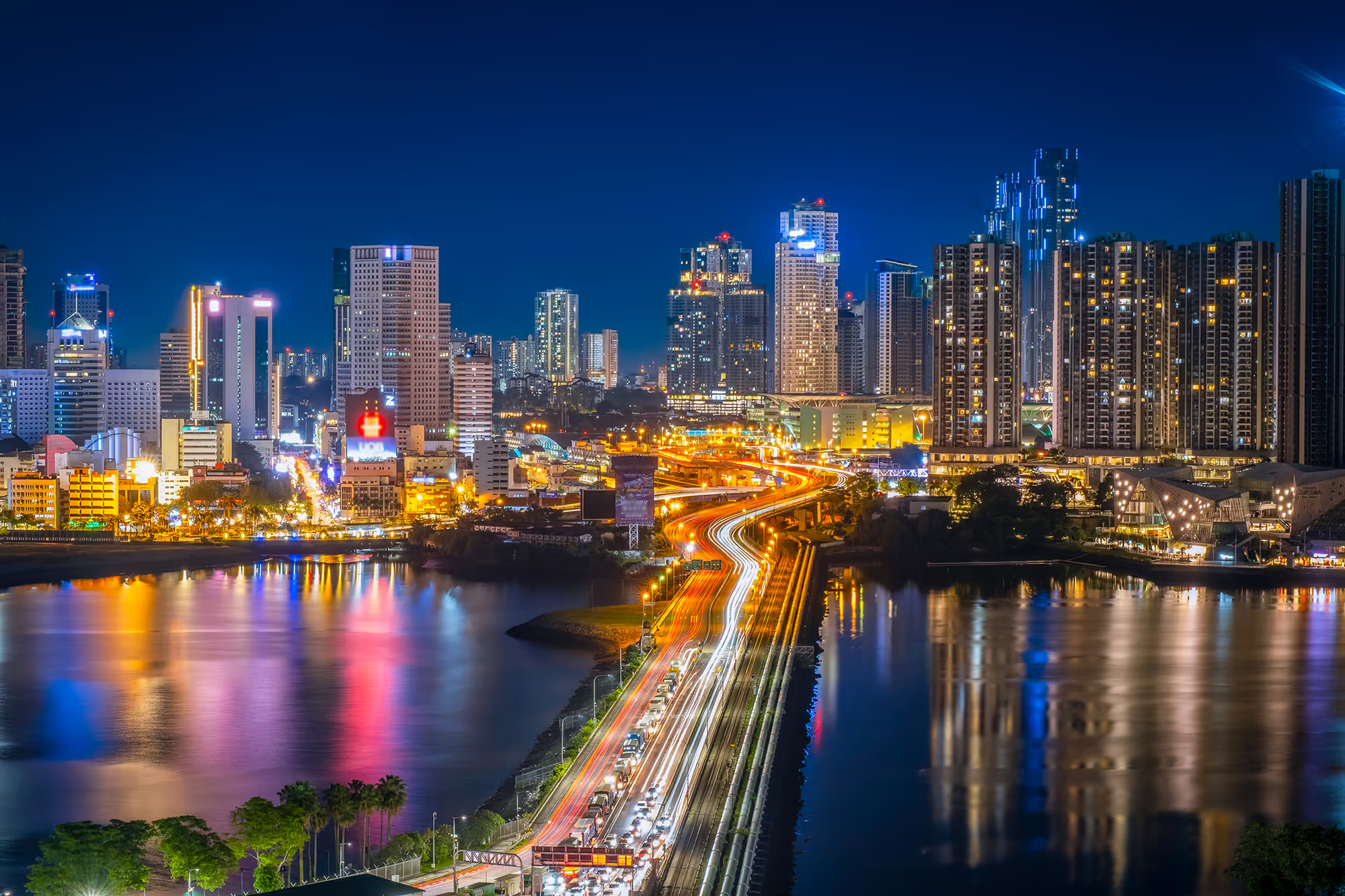
Crossing the border between Singapore and Malaysia is what we call a “unique experience”—and trust me, it can swing from feeling like a smooth private hotel check-in to resembling the chaos of a weekend night market, depending entirely on how well you’ve done your homework. The two main gateways, the Johor-Singapore Causeway and the Tuas Second Link, each have their own distinct personality and rhythm. Whether you’re a Singapore citizen, a long-term pass holder, or someone who makes this journey regularly, understanding the latest immigration requirements and customs rules is honestly the make-or-break factor for a stress-free border crossing.
Here’s the reality: peak hours can turn the Johor Singapore Causeway into what locals affectionately call a “human hive of activity,” with traffic conditions that can shift from manageable to absolutely brutal during weekends, public holidays, and those dreaded school break periods. By familiarizing yourself with the unique “personality” of each crossing—whether it’s the historic Singapore Causeway with all its character (and crowds) or the more modern, typically faster Second Link—you can select the route and transportation options that genuinely suit your comfort level and schedule. With just a little smart preparation, you’ll find yourself gliding through immigration checks and customs like you’ve been doing this for years, leaving you with significantly more time to actually enjoy the journey between these two incredible countries.

Pre-Departure: Digital Entry Requirements (The “Hidden” Rules)
Before you worry about what is in your luggage, you need to ensure you can actually get through the immigration gantry. Unlike the old days of just showing a passport, both Singapore and Malaysia now rely on digital arrival cards.
The rules here depend entirely on who you are (Resident vs. Tourist) and how you are crossing (Driving vs. Public Transport).
1. Entering Malaysia (The MDAC)
If you are planning to cross into Johor Bahru, you may need to submit the Malaysia Digital Arrival Card (MDAC) online three days before your trip. The MDAC is also commonly referred to as the ‘arrival card Malaysia’, and it is a crucial online pre-arrival form that must be completed to ensure smooth entry into Malaysia.
After completing the digital entry requirements, always check that your passport has at least six months of validity from your date of entry and contains enough blank pages for immigration stamps and records.
2. Entering Singapore (The SG Arrival Card)
When returning to (or entering) Singapore, the rules flip.
3. Driving into Malaysia (The VEP Warning)
If you intend to drive a Singapore-registered car into Malaysia, there is one critical hurdle you must clear months in advance.
As of July 1, 2025, Malaysia strictly enforces the Vehicle Entry Permit (VEP). All Singapore-registered cars must have a valid VEP-RFID tag installed to enter.
Proper preparation—including understanding visa requirements, checking passport validity and blank pages, and ensuring all documents are in order—is essential for a smooth Singapore-Malaysia border crossing.
Exiting Singapore: The 3/4 Tank Rule & Driving Laws
If you are crossing the border by bus, train, or private transfer, you can skip this section and relax. This rule applies strictly to drivers of Singapore-registered vehicles.
However, if you are behind the wheel, this is the single most crucial check you must perform before leaving your driveway.
The Official Law
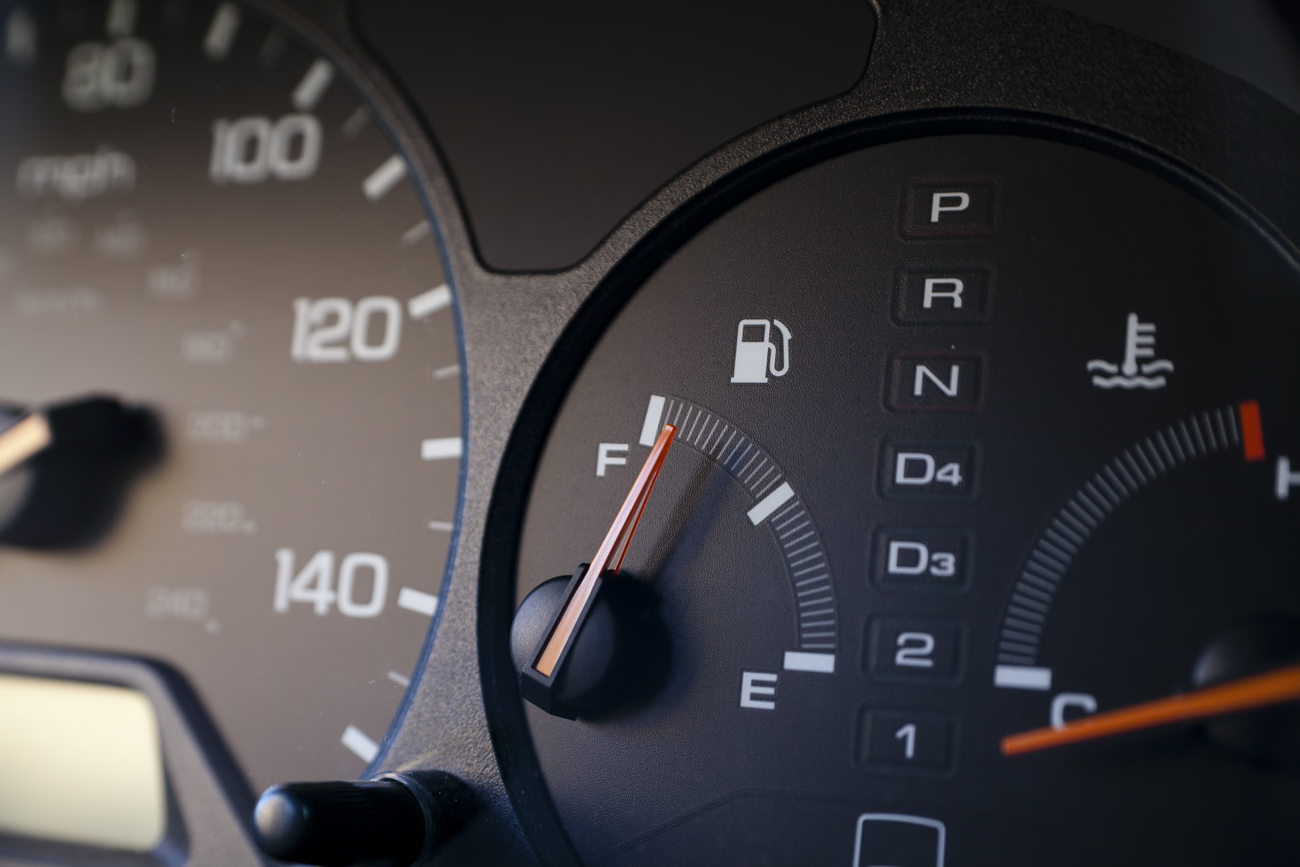
It is illegal for a Singapore-registered motor vehicle to leave Singapore without its fuel supply tank being at least three-quarters full.
The Consequence of “Forgetfulness”
If you are caught with less than 3/4 of a tank:
Time Your Exit
The “3/4 Tank Rule” exists to prevent drivers from crossing solely to buy cheaper fuel, which contributes to the massive traffic jams at the border. To keep your own trip stress-free, avoid becoming part of that statistic.

Entering Singapore: GST Relief & The “Luxury” Shopper
The drive into Singapore is often smooth, but the customs check at the end can be a source of hidden anxiety—especially if you have been shopping.
Singapore Customs enforces strict regulations at land checkpoints, with specific rules on prohibited items, cash declaration, and allowances. Unlike the airport, where travelers often breeze through with generous allowances, the land checkpoints (Woodlands and Tuas) operate under a much stricter framework. The most critical rule to understand here is the 48-Hour Rule.
The Official GST Rule
Singapore imposes a 9% Goods and Services Tax (GST) on all goods brought into the country. However, travelers are granted “GST Import Relief” based strictly on how long they have been away:
The “Luxury” Context (Why You Should Declare)
For the casual snacker buying SGD$50 worth of biscuits, the SGD$100 relief is usually sufficient. But for the luxury traveler, this limit is easily breached.
If you purchase a designer handbag for SGD$3,000 in Johor Bahru, your SGD$100 relief is a drop in the ocean.
Visual Walkthrough: How to Declare (Step-by-Step)
For those who fear the unknown, here is exactly what happens when you declare your goods, so you can do it without a racing heart.
- Digital Pre-Payment (Recommended): The most comfortable way is to use the Customs@SG web app. You can declare and pay the GST before you even reach the border. You get an e-receipt, allowing you to breeze through the Green Channel.
- The Red Channel (In-Person):
- At the Gantry: If you are driving, wind down your window and explicitly tell the officer, “I have goods to declare.”
- The Inspection: You will be directed to the side (Customs Tax Payment Office). Park your car and bring your purchase and receipt to the counter.
- The Payment: Present your receipt. The officer will calculate the tax. You can pay immediately using a credit card, NETS, or CashCard.
- The Exit: Once paid, you are free to go. No interrogation, no stress.
Banned Food Items: What You Can (and Can’t) Bring
Navigating the food aisles in Malaysia is fun; navigating the customs line with the wrong items is not.
While Singapore is generally welcoming to tourists, the Singapore Food Agency (SFA) draws a hard line when it comes to food safety. The rules are designed to keep diseases (like African Swine Fever or Bird Flu) out of the country.
The “Green Light”: What You Can Bring
You are generally allowed to bring in processed food products for personal consumption without a permit.
The “Red Light”: Strictly Prohibited Foods
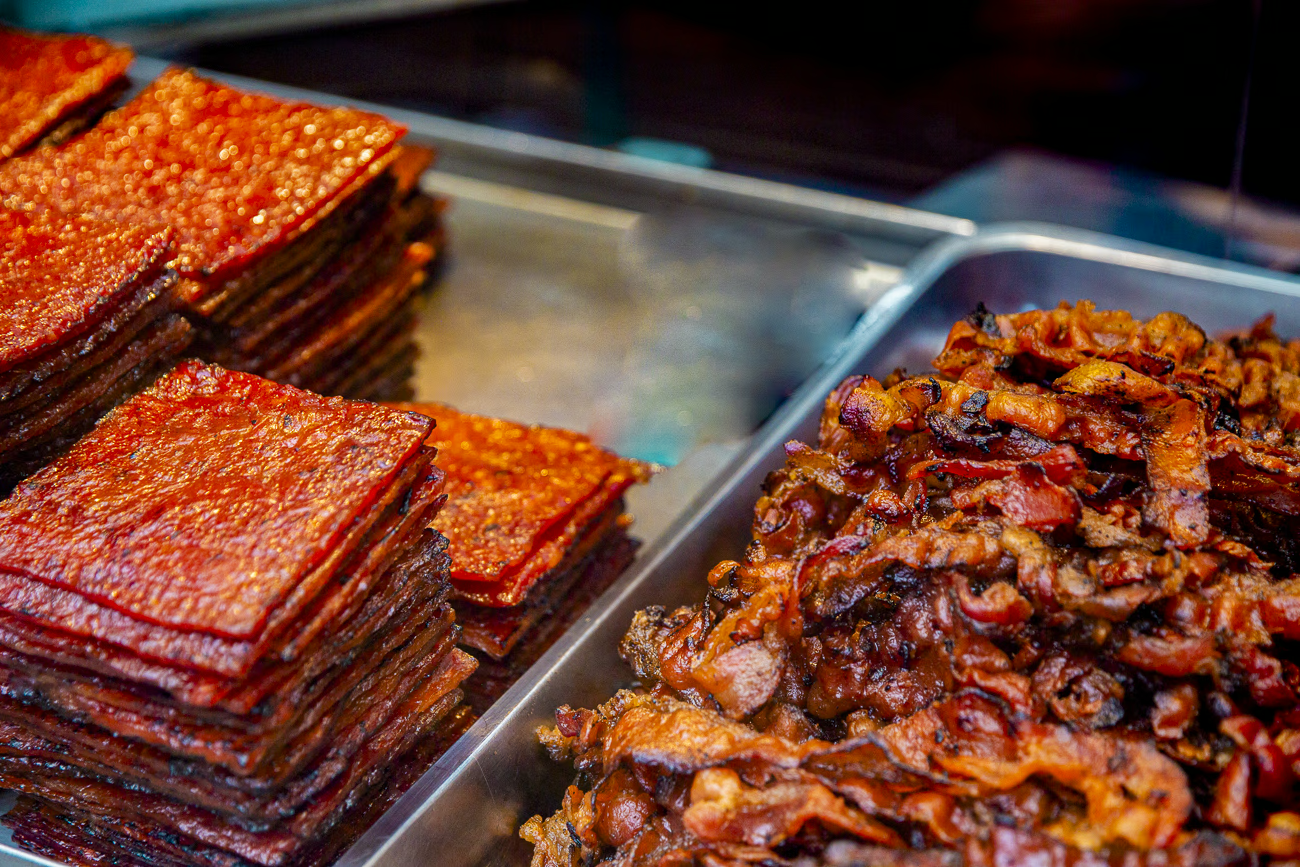
This is where most travelers get caught. Singapore prohibits the entry of meat from Malaysia for travelers, even if you bought it from a clean supermarket.
When in Doubt, Leave it Out
If you are standing in a shop in Johor Bahru, wondering, “Is this sausage roll allowed?”—put it back. The money you save on a snack is never worth the stress of a customs inspection. Stick to pre-packaged dry goods (like those famous Amos cookies or local biscuits), and you will breeze through the Green Channel every time.
Prohibited & Controlled Items to Know
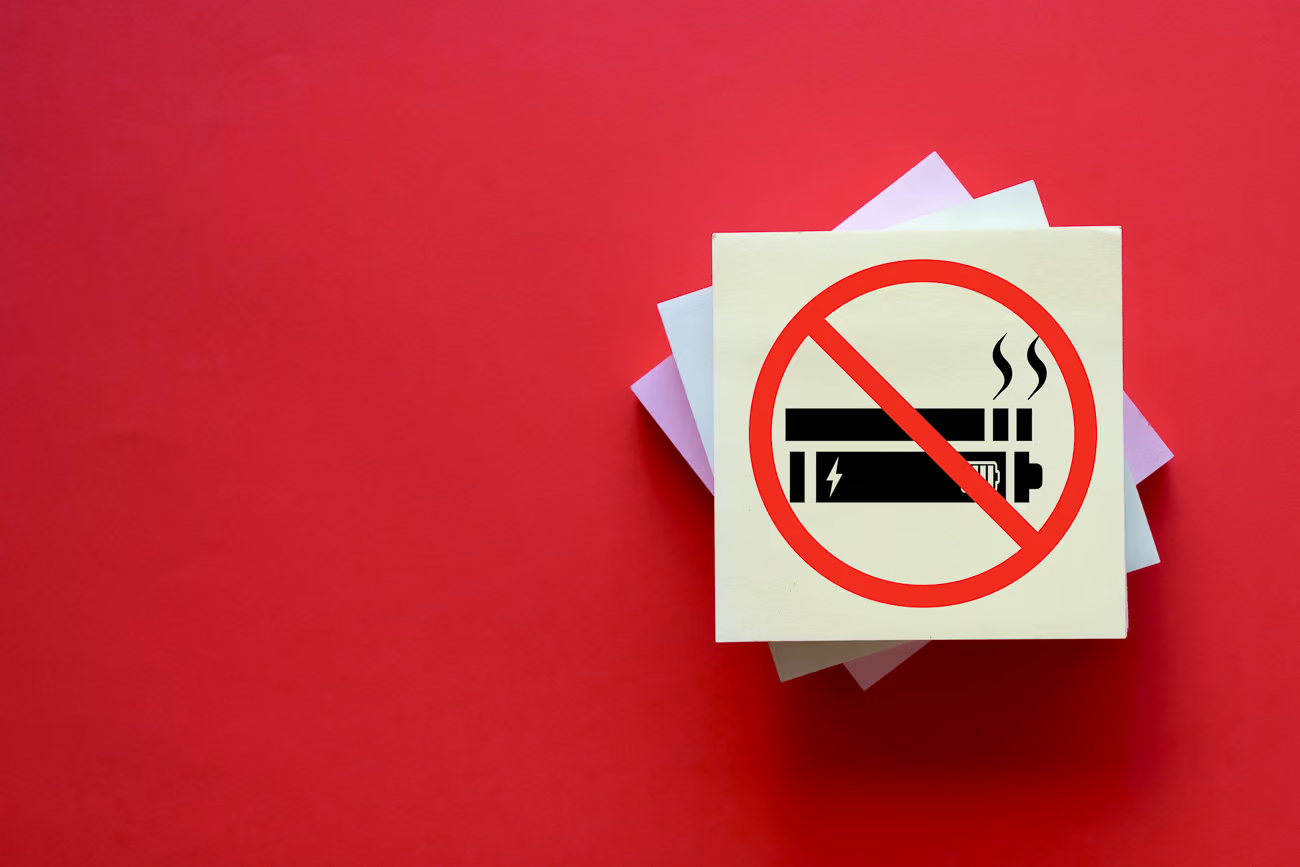
Beyond food, there is a specific list of items that can turn a routine border crossing into a legal nightmare. Customs officers at Woodlands will check your trunk or bags for these items. While some rules (like the ban on chewing gum) are famous, others (like the specific rules on medication and vaping) catch travelers off guard every day.
1. The “Strictly Prohibited” List (Do Not Bring These In)
These items are banned in Singapore. Possession alone is an offense.
2. Controlled Goods (Requires a Permit)
You can bring these items, but you need paperwork.
The “Digital Pharmacy” Check
If you are traveling with strong medication, snap a photo of your prescription and keep it on your phone. If a customs officer asks about your pills, having the document ready instantly defuses the situation and keeps your interaction quick and stress-free.
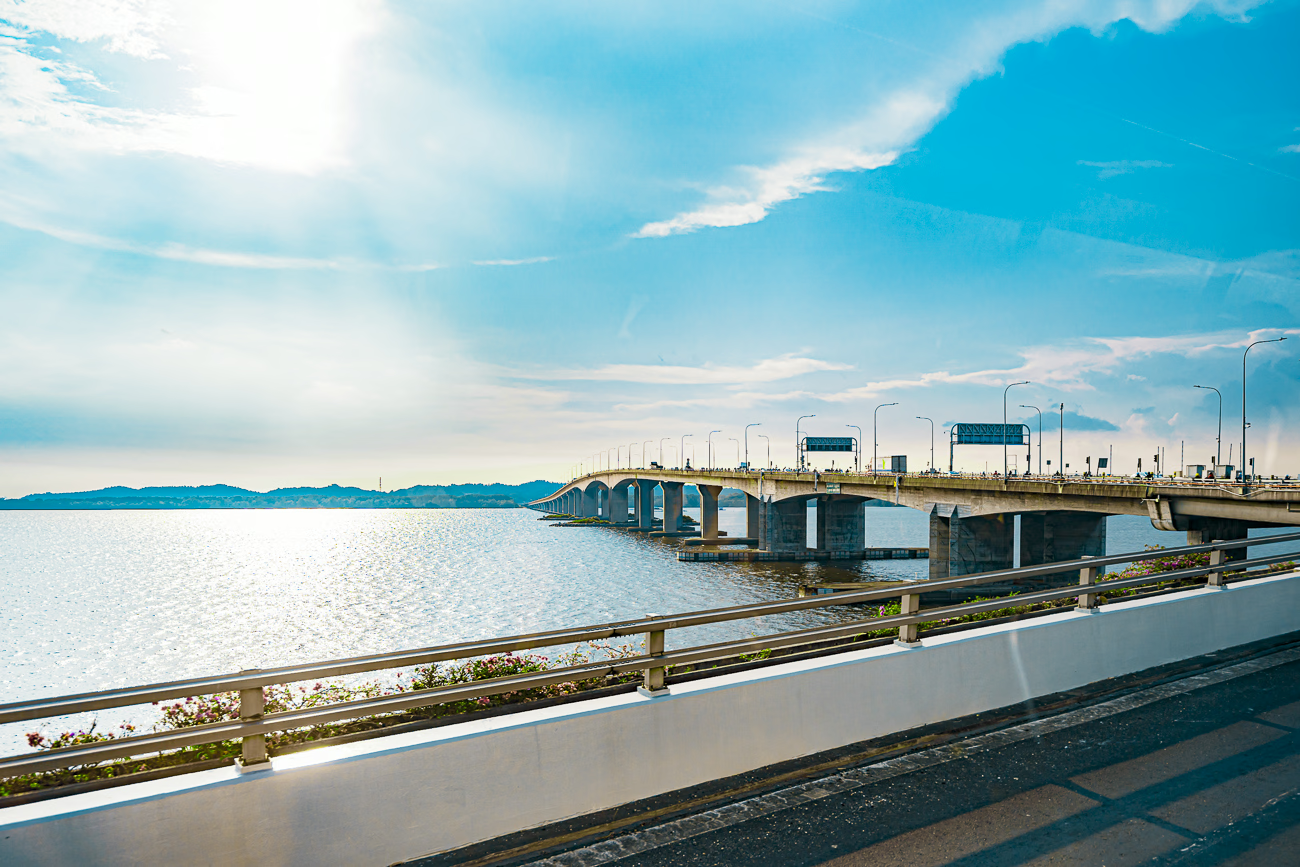
Strategic Crossing: Checkpoints & Transport Modes
Knowing the laws keeps you out of jail, but knowing the logistics keeps you out of a 4-hour traffic jam. The experience of crossing the border depends entirely on where you cross and how you travel. Immigration checkpoints at the border require careful planning, especially during busy periods and school holidays, as congestion and wait times can increase significantly.
For most travelers, the main options are the Woodlands Checkpoint and the Tuas Checkpoint. The Woodlands Checkpoint connects to the Woodlands Causeway, which is a key route for those heading to Johor Bahru. On the Malaysian side, the Johor Bahru Checkpoint serves as the main Malaysian immigration checkpoint for this route. Either the Johor Causeway or the Tuas Second Link can be used to cross between the two countries, providing access to major destinations like Kuala Lumpur.
If you’re taking the KTM Shuttle Tebrau train, you’ll depart from the Woodlands Train Checkpoint. Here, travelers clear both Singapore and Malaysia immigration at the same location, making immigration clearance more efficient and streamlined.
For public bus options, major bus operators such as Causeway Link and SBS Transit provide frequent cross-border services. Buses depart from key hubs like Queen Street Bus Terminal and Golden Mile Complex, offering convenient connections to Johor Bahru and beyond. You can use an EZ-Link card to pay for public transport fares and some tolls, making transactions seamless.
If you’re driving, foreign-registered vehicles must have proper documentation, including a valid Vehicle Entry Permit (VEP) and, if required, an international driving permit to enter Malaysia. Failure to comply with these requirements can result in denied entry at the border. It’s also important to carry Malaysian ringgit for tolls, parking, and small purchases after you enter Malaysia. The Immigration Department and the Immigration Department of Malaysia are responsible for processing visa extensions and related immigration services.
Travel Tips for a Smooth Journey:
Following these travel tips and understanding the procedures at the two countries’ border will help ensure a smooth journey between Singapore and Malaysia.
1. The Two Checkpoints: Woodlands vs. Tuas second link
Singapore has two land connections to Malaysia. Choosing the wrong one can add hours to your trip.
2. Transport Modes: Ranked by “Comfort.”
We have tested every method. Here is how they stack up for the stress-averse traveler.
Option A: The Private Cross-Border Taxi (The “Luxury” Choice)
Option B: The KTM Shuttle Tebrau (The “Speed” Choice)
Option C: Driving Yourself (The “Freedom” Choice)
Option D: Public Bus (The “Budget” Choice)
Crossing with Confidence
Crossing the border between Singapore and Malaysia does not have to be a gamble. While the rules—from the 3/4 tank law to the GST limits—are strict, they are also clear. The anxiety most travelers feel comes from uncertainty, but by following a few simple steps, you can remove that stress entirely. You now know exactly how much fuel to have, which lane to pick, and what to do with that luxury handbag in your trunk.
When you follow these rules, you aren’t just complying with the law; you are buying yourself a stress-free journey. Of course, the border is just the gateway. While the checkpoint is the first hurdle, navigating the rest of your stay with total peace of mind often requires understanding the Singapore civil regulations that keep the garden city orderly and comfortable for everyone.
Once you are through, you can focus on what really matters. You can enjoy your curry puff in Johor Bahru, shop for your new wardrobe, or drive back into the city knowing that the customs gantry is just a simple pause in your trip, not a stopping point. Travel is meant to be relaxing, and letting your preparation handle the details ensures it stays that way.

Quick Answers to Your “What If” Questions
We know that sometimes the official government websites don’t answer the real questions you have when you are packing your bag. Here are the detailed answers to the 5 most common things travelers ask us.
I’m just going for a quick dinner in Johor Bahru—do I really need a VEP?
Yes, absolutely. As of July 1, 2025, Malaysia has removed all “short trip” or “off-peak” exemptions. The rule is simple: if your car has a Singapore license plate, it must have a valid VEP-RFID tag installed.
Can I bring my leftover “dabao” (takeaway) back to Singapore?
It depends entirely on the ingredients. Singapore’s food laws are focused on preventing animal diseases.
Since I am coming from Malaysia, can I buy Duty-Free alcohol?
No. This is a huge trap for new travelers. The standard “Duty-Free Allowance” (buying cheaper alcohol at the border) does not apply if you are arriving from Malaysia.
Do I still need my physical passport if I use the QR Code clearance?
Yes, absolutely. While the new QR code systems (via the MyICA app for Singapore or MySejahtera/MDAC for Malaysia) are fantastic for speeding up the scanning process, they do not replace your physical travel document.
Does the “3/4 Tank Rule” apply to my diesel car?
Yes. This is one of the most dangerous myths among drivers. While it is true that diesel vehicles were exempt in the past, that loophole was firmly closed in 2019. Today, the 3/4 tank mandate applies to all Singapore-registered vehicles running on petrol, diesel, or Compressed Natural Gas (CNG).
Never Miss an Update
Add yourcomforttrip.com as a Preferred Source on Google to see more of my content in AI Mode and AI Overviews.
