Singapore is arguably one of the most photogenic cities in Asia. From the futuristic Supertrees at Gardens by the Bay to the vibrant shophouses of Katong, the desire to document everything is completely natural. We want you to capture these memories—after all, looking back on a great trip is half the fun.
However, Singapore’s “Comfort” philosophy relies on a strict framework of privacy and safety that might differ from what you’re used to back home. The line between “capturing a moment” and “harassment” is legally defined here, and our airspace is some of the most tightly regulated in the world.
To ensure your vacation remains a stress-free reward rather than a legal headache, here is everything you need to know about pointing your lens in the Lion City.

Can tourists fly drones in Singapore?
Yes, tourists are technically allowed to fly drones, but Singapore’s status as a major international aviation hub means extremely strict aviation laws govern the activity. It is not treated as a casual hobby here; it is a regulated activity where a simple mistake can lead to severe penalties.
While you can bring your drone into the country without a special import permit (unlike some destinations), operating it is a different story. The rules are enforced rigorously by the Civil Aviation Authority of Singapore (CAAS) and apply equally to locals and visitors. There is no “tourist ignorance” clause in the law.
If you are just here for a short, relaxing vacation, our honest advice is that the regulatory hurdles often outweigh the benefits. However, if you are a serious enthusiast determined to fly, you must navigate a specific set of requirements regarding registration and restricted zones.

Do I need a license or registration to fly?
The 10-Second Summary
Registration is mandatory for any drone weighing more than 250 grams. This includes popular models like the DJI Mavic 3 or Air 3. You must register your device with the Civil Aviation Authority of Singapore (CAAS) before you fly.
The regulations are strictly tiered by weight. Here is the breakdown to help you decide which drone to pack:
1. The “Comfort” Zone (Under 250g)
Models: DJI Mini 4 Pro, Mini 3, or similar lightweight drones.
The Rule: No registration required for recreational use.
Why it’s the best choice: You can essentially unbox and fly (carefully). You do not need to deal with government accounts, stickers, or fees. You simply need to observe the standard safety guidelines (Line of Sight, No-Fly Zones, 60m altitude limit).
2. The “Paperwork” Zone (250g to 1.5kg)
Models: DJI Mavic 3 Pro (~960g), Air 3 (~720g), etc.
The Rule: You must register the drone.
The “Tourist Trap”: Registration is a multi-step process that requires a physical label and a waiting period.
Step 1: Get a UAPass (Do this early): Tourists cannot use the local “SingPass” system. You must apply for a UAPass account online, which takes about 5 working days to process. Do this before you travel.
Step 2: Buy the Label ($25): You must purchase an official registration label for SGD$25.
Tip: Delivery is only within Singapore. Instead of buying online, buy it over the counter at designated SingPost branches upon arrival.
Step 3: Tag & Register: Stick the label on your drone, take a photo of it, and upload it to the CAAS portal to finalize your registration.
MANDATORY: Broadcast Remote ID (B-RID):
The Rule: As of 1 December 2025, all drones above 250g must be equipped with Broadcast Remote ID (B-RID) technology.
The Reality: If your drone does not have this built in (check your settings), you are legally required to attach a separate compliant B-RID module. Flying without this is now an offense.
3. The “No-Go” Zone (Commercial Use or >1.5kg)
The Rule: The requirements jump significantly here.
>1.5kg (e.g., Mavic 2 Zoom, older Phantoms): You need a UA Basic Training Certificate even for recreational use.
Commercial Use: You need a full Unmanned Aircraft Pilot Licence (UAPL) and an Operator Permit, regardless of drone weight.
The Reality: Obtaining these permits involves theory tests and safety audits, making it largely unfeasible for a short-term tourist.
Our Honest Advice: Unless you are staying for an extended period, the 5-day wait for a UAPass, the $25 fee, and the new Broadcast Remote ID requirement make bringing a drone over 250g a significant hassle. Stick to a sub-250g drone to keep your trip stress-free.
Registration & Rules: Visit the CAAS Official Site for the portal links and latest requirements.
Where can I fly?
Singapore’s airspace is tightly regulated due to our small size and status as a busy aviation hub. Rather than memorizing a complex list of restricted sites, the best approach for a stress-free trip is to understand the general rules and use the official government map.1
1. The “No-Fly” Categories
You should generally assume the following areas are strictly off-limits unless you have a specific permit:
2. How to find a legal spot (The Official Tool)
Because restrictions can change (e.g., for National Day rehearsals), you should never rely on old blog posts.
The Only App You Need: OneMap The Civil Aviation Authority of Singapore (CAAS) uses the OneMap app as the authoritative reference for drone pilots.
A) Download OneMap (iOS/Android) or visit the website.
B) Select the “DroneQuery” theme.
C) Check your location:
3. The “Safe Bets”: Official Drone Parks
If you want to be 100% sure you are in a legal zone without analyzing a map, head to an Unmanned Aircraft Flying Area (UAFA). These are government-designated spots specifically for hobbyists:
Note: Check the OneMap app (iOS/Android) or website immediately before you fly to ensure you are not flying into the “No-Fly” zone.

What happens if I break these rules?
Singapore treats aviation safety with zero tolerance. Unlike in some countries where you might get a warning for a first offense, Singaporean authorities (police and CAAS) actively enforce these laws, and “tourist ignorance” is explicitly not a valid legal defense.
If you are caught violating drone regulations, here is the reality of what you face:
1. The “Administrative” Penalties (Registration & Labeling)
Even if you are flying safely in a permitted area, you can be penalized just for skipping the paperwork.
2. The “Restricted Zone” Penalties (The Big Ones)
This is where the fines become severe. If you fly into a “No-Fly Zone” (e.g., near Marina Bay, Sentosa, or an airport) or a “Protected Area” (e.g., military camps, Istana), the law views it as a security threat.
3. Immediate Confiscation
Beyond the fines, the most immediate consequence for a tourist is the loss of gear. Police have the authority to seize your drone as evidence during the investigation. In many cases, the drone is forfeited permanently, meaning you will go home without your expensive equipment.
⚠️ Real-Life Warning: These aren’t empty threats. In a high-profile case, a man was fined SGD$51,000 for flying his drone near a military airbase. The act was deemed so dangerous that it forced the Republic of Singapore Air Force to emergency-divert two aircraft.
What to do if authorities approach you:
Our Advice: Ditch the Drone, Keep the Zen
For the vast majority of travelers, the most stress-free option is to leave the drone at home. The “No-Fly Zones” cover precisely the iconic areas you’d want to film, and the risk of a heavy fine isn’t worth the footage.
Stick to your handheld camera, respect people’s privacy, and enjoy the views with your own eyes—it’s the best way to ensure your trip remains a true escape.
The “Comfort” Alternative: How to Get the Shot (Legally)
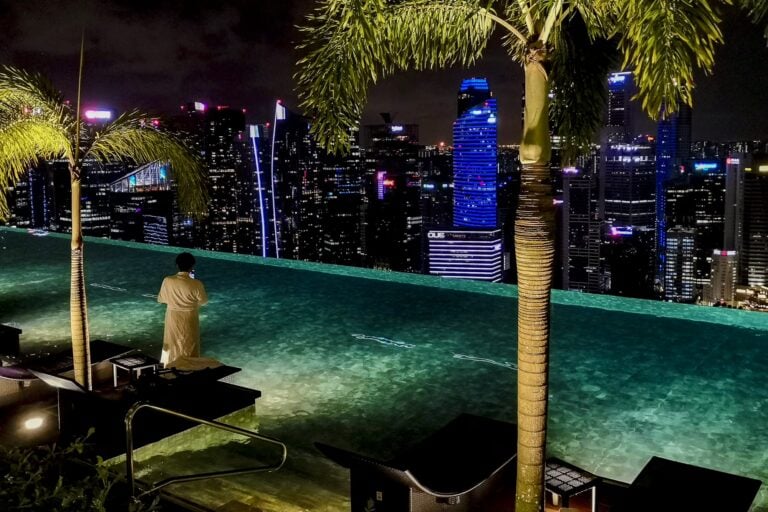
If you are disappointed about leaving the drone behind because you wanted those iconic, sweeping aerial views of the city, don’t worry. Singapore is a vertical city, which means you can get “drone-like” perspectives just by taking an elevator.
Here are three “Comfort Approved” spots where you can capture the skyline legally, with a cocktail in hand instead of a remote controller:
Is street photography legal in Singapore?
If you’ve decided to ground the drone, you’ll be happy to know that ground photography is much more welcoming. Taking photos in public spaces is generally legal and socially acceptable.
In fact, Singapore is often cited as a paradise for photographers. You are free to snap shots of our stunning architecture, street scenes, and general daily life without a permit. For the “Comfort” traveler, this is a huge plus. Unlike in many other major cities, Singapore is incredibly safe, meaning you can comfortably walk around with expensive camera gear or set up a tripod for a night shot at Marina Bay without constantly worrying about theft.
However, while the general rule is “yes,” the key cultural nuance here is respect. We don’t have a blanket ban on public photography, but we do have a strong expectation of privacy. You generally do not need a permit for casual shooting, but you must be aware that the legal landscape changes the moment your lens targets an individual in a way that feels intrusive.
When does photography become harassment?
Under the Protection from Harassment Act (POHA), photography becomes illegal when it crosses from observation into harassment by causing an individual alarm or distress. This is the firm legal line that protects everyone—from ordinary residents to visiting celebrities—from intrusive behavior.
Real-World Scenarios: Where is the Line?
To help you navigate this comfortably, let’s look at three common situations to see exactly where the law draws the line between a hobby and a crime.
Scenario A: The Enthusiastic Tourist (Legal)
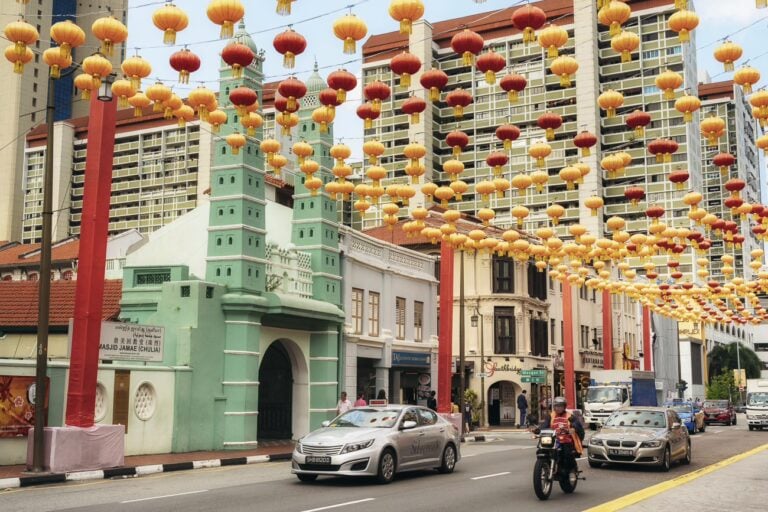
You are walking down Orchard Road or through Chinatown and want to capture the vibrant atmosphere. You take wide shots of the bustling street, the architecture, and the crowds moving through the scene.
Is this okay? This is perfectly legal. You are documenting the public environment, not targeting specific individuals to harass them.
Scenario B: The “Crazy Fan” (Illegal Stalking)
You spot a visiting celebrity or a famous influencer shopping during their private downtime. Excited, you and a group of friends decide to follow them from the shop to their hotel, surrounding them to get photos even as they try to walk away.
Is this okay? This is a serious offense. In Singapore, if a group’s actions cause a person distress, it crosses the line into unlawful stalking. The law protects celebrities just as strictly as it protects residents; their “public figure” status does not give you the right to harass them.
Scenario C: The Persistent Portrait (Harassment)
You see a stylish local on the street and find them interesting. You start taking photos of them. They notice you, look uncomfortable, and turn away or try to move out of your frame. Ignoring this social cue, you follow them down the street to get a better angle.
Is this okay? You have crossed the line. Persistently photographing someone after they have indicated non-consent is considered harassment under POHA.
The Consequences
It is vital to understand that “harassment” is not just a social faux pas; it is a criminal offense. This includes taking insulting photos or “upskirt” images.
Harassment: A first-time offender can face a fine of up to SGD$5,000, imprisonment for up to 6 months, or both.
Unlawful Stalking: For persistent stalking (like Scenario B), the penalties increase to a potential 12 months in jail.
Our Advice: The rule of thumb for a comfortable trip is simple. If someone smiles, snap away. If they look down, turn away, or say “no,” stop immediately and move on. The law will almost always take their side.

Where are the strict “No-Photography” zones?
While street photography is legal, there are specific environments where photography is strictly forbidden. These rules are enforced for reasons ranging from national security to personal privacy. To keep your trip stress-free, you must respect these distinct categories of restricted zones.
1. High-Security Areas (National Security)
For security reasons, photography is completely forbidden in specific high-security areas, regardless of your artistic intent. Getting caught here can lead to immediate photo deletion or security questioning.
Immigration & Customs: You absolutely cannot take photos or videos inside the immigration halls at checkpoints (like Changi Airport or the Woodlands land border).
Military Bases: It is illegal to photograph any military installation or camp. If you see a sign with a soldier silhouette or a “No Photography” symbol near a fenced area, put the camera away immediately.
Government Offices & Sensitive Installations: Photography is generally prohibited inside or around sensitive government buildings, such as the Istana (the official residence and office of the President) and the Parliament House. Security personnel will actively intervene if they see you taking photos of security checkpoints or entryways.
2. Commercial Privacy (Private Property)
Many of the places you will want to photograph—like our famous shopping malls, heritage hotels, or trendy cafes—are technically private property.
Casino Gaming Floors: Photography is strictly prohibited on the gaming floors of integrated resorts like Marina Bay Sands and Resorts World Sentosa to protect the privacy of patrons.
Shops & Restaurants: Private businesses have the right to prohibit photography on their premises. Always look for and respect “No Photography” signs at entrances.
3. Residential Privacy (High-Rise & Luxury Homes)
Singapore is unique because we have both ultra-dense high-rises and sprawling, luxurious “Good Class Bungalows” (GCBs). Both require a strict respect for privacy.
A) The High-Rise Rule (Condos & HDBs)
The Nuance: In a dense city, your hotel room or apartment window often looks directly into someone else’s.
The Rule: It is illegal to use a zoom lens to take photos of people inside their private spaces. While capturing the geometric beauty of a building’s facade is acceptable, zooming in to capture a family eating dinner inside their unit is a violation of their privacy.
B) The Landed Property Rule (Bungalows & Shophouses)
The Attraction: You will likely walk past stunning heritage shophouses in Joo Chiat or massive luxury bungalows near Orchard. It is natural to want a photo of these beautiful designs.
The Boundary: You are generally free to photograph the architecture from the public road. However, you must not photograph the residents or their private activities.
What to Avoid: Do not stick your camera lens through a gate, hold it over a perimeter wall, or zoom into a private garden or living room window.
A “Comfort” Warning: Many high-end landed estates (especially Good Class Bungalows) employ private security patrols. Loitering outside a gate to get the “perfect shot” can cause alarm and lead to security asking you to move along. For a stress-free walk, snap a quick shot of the building from a respectful distance and keep moving.
4. Cultural & Religious Sites
While not legally banned, many temples and mosques have strict rules about photography to maintain the sanctity of the space.
The Etiquette: Some deities cannot be photographed, and using a flash is often considered disrespectful. Always look for signage or ask for permission before shooting inside a place of worship.

Want to keep your entire trip just as stress-free?
While drones and cameras have their own specific rules, Singapore has a few other unique regulations—from chewing gum to late-night drinking—that every visitor should know. To ensure your vacation remains a reward and not a legal headache, check out our comprehensive Singapore Law for Tourists hub for a simple, “Comfort-approved” breakdown of everything you need to know before you land.
Any Remaining Questions? (Better Safe Than Fined)
Can I fly a drone weighing under 250g (like a DJI Mini) without registering it?
Yes, if you are flying purely for recreation. Drones weighing 250 grams or less do not need to be registered with the Civil Aviation Authority of Singapore (CAAS). However, you must still strictly follow all operating guidelines, such as avoiding No-Fly Zones and keeping the drone within your line of sight.
Can I fly my drone at Marina Bay Sands or Gardens by the Bay?
No. Gardens by the Bay explicitly bans the use of drones to ensure visitor safety. The wider Marina Bay area is also restricted; flying there requires specific Activity Permits that are difficult for tourists to obtain. Tourists have faced heavy fines for flying in these zones without permission.
Can I fly a drone on Sentosa Island?
No. Recreational drone flying is strictly prohibited on the entire island of Sentosa. Sentosa is a popular resort island with its own management rules to ensure public safety. While professional permits can be applied for, they are rarely granted for casual use. It is best to enjoy the beaches and attractions without your drone.
Can I use a tripod/gimbal in my hotel or rooftop bars?
Generally, using handheld gimbals or small stabilizers is acceptable in most high-end hotels and rooftop bars, as they are discreet and do not disrupt the ambiance. However, setting up a full-sized tripod is often restricted on these private premises, particularly during peak hours, as it can be seen as a safety hazard for staff or a disturbance to the relaxing atmosphere that other guests are paying for. To ensure your evening remains seamless, the “Comfort” move is to simply ask the concierge or host for permission before you unpack your gear, or aim for off-peak hours when the venue is quieter.
Can I take photos of government buildings?
Generally, yes, for most public government buildings like the National Gallery (formerly Supreme Court) or City Hall from the outside. However, photography is strictly prohibited at high-security installations like the Istana, Parliament House, military camps, and immigration checkpoints. Always look for signage; if you see a “No Photography” sign, respect it immediately to avoid security questioning.