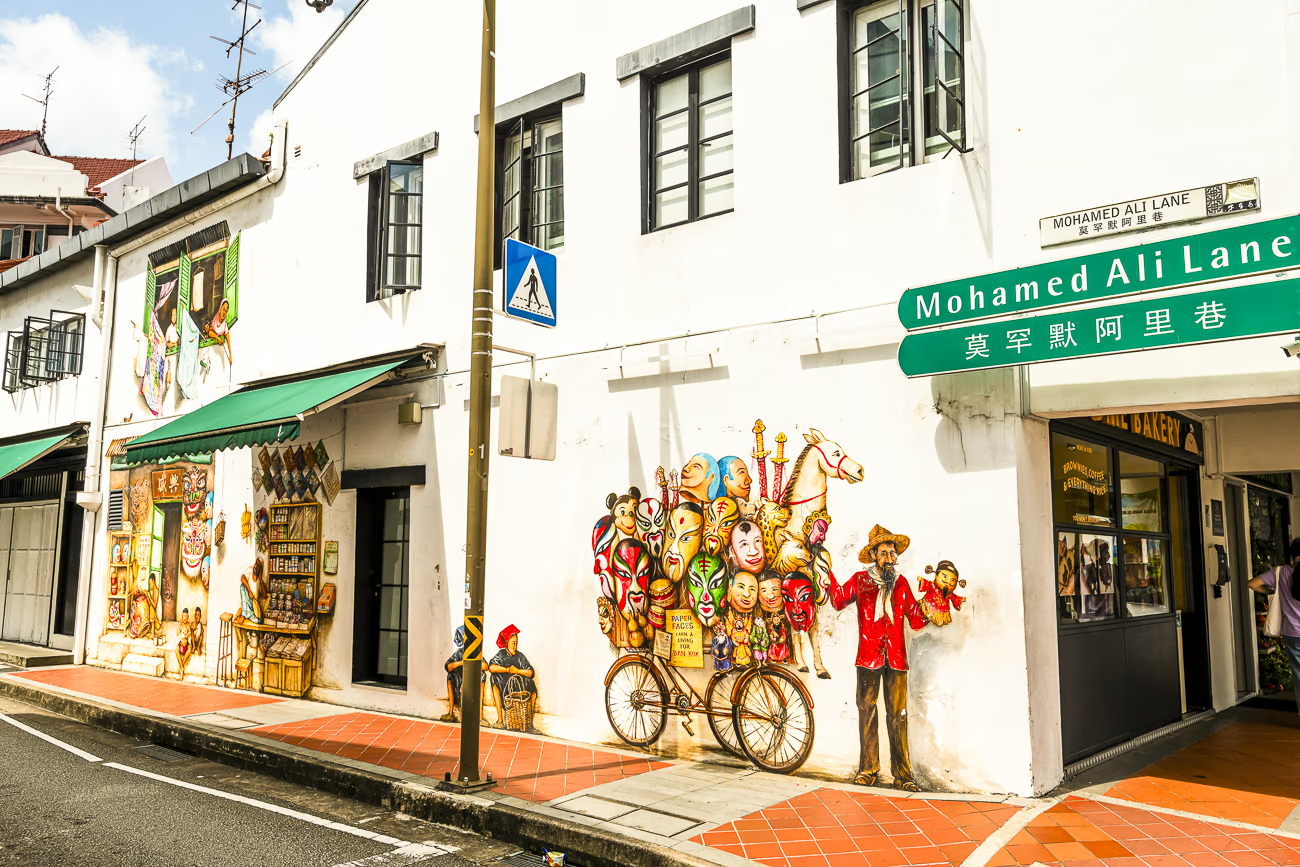
If you stroll down Haji Lane in Kampong Gelam, you might feel like you have stepped into a completely different version of Singapore.
The walls are exploding with color. Giant murals cover entire shophouses, and the vibe feels effortlessly cool and rebellious. To the untrained eye, it looks like a creative free-for-all where artists run wild. But do not let the spray paint fool you. Underneath those vibrant layers lies a highly regulated system. Acts of graffiti—even when artistic—are considered vandalism under Singapore law, and have attracted both condemnation and much controversy internationally due to the severity of penalties and the strong stance taken by authorities.
As travelers, we naturally want to join in—maybe by leaving a sticker on a lamp post or a quick signature to mark our visit. However, in Singapore, the difference between a celebrated masterpiece and a criminal offense often comes down to just one thing: a single piece of paper.
This guide separates the myths from the mandate. We will clarify exactly what legally counts as vandalism, why everyday tourist habits like “sticker bombing” can result in hefty fines, and reveal the few designated places where these rules are suspended.

What Counts as Vandalism? (The Official Definition)
In Singapore, vandalism is legally defined as any act of writing, drawing, painting, marking, or affixing anything on public or private property without the owner’s consent.
One crucial distinction for creative travelers to understand is that artistic intent is not a legal defense. The law does not critique the quality of the work; it strictly validates the permission. Defacing property, regardless of intent, is still an offense. A stunning, intricately painted mural done without a permit is considered a criminal offense, while a simple doodle on a designated wall at Somerset Skate Park is recognized as legal street art.
There is also a common misconception that private property is a “free zone” if you know the owner personally. You might think, “My friend owns this cafe, so he said I can paint the shutters.” However, if an authorised officer stops you, even an owner’s verbal consent is not enough to protect you from legal trouble. The law requires explicitly written consent to definitively distinguish a legal modification from an act of vandalism. Any such act, including affixing posters or defacing property, must be supported by the property owner’s written consent.
While this summary covers the core definition, the precise legal text includes specific clauses regarding the substances used and the intent to display. Singapore Vandalism Act (Chapter 341)

Common “Innocent” Mistakes to Avoid
For many travelers, leaving a small mark is a way to connect with a destination—a habit picked up in cities like Berlin, Paris, or New York, where street culture is more permissive. However, Singapore’s definition of vandalism is broad, and it catches many well-meaning visitors off guard. The law covers different acts and offences relating to stealing, destroying, or damaging public or private property, with severe penalties for those found guilty.
Here are the specific actions that might seem harmless elsewhere but are legally classified as offenses here:
The Sticker Slap
In many Western cities, “sticker bombing” a lamp post or the back of a bus seat is seen as a harmless subculture. In Singapore, this is legally defined as “affixing a mark” on public property. Authorities are vigilant about removing them to maintain the city’s clean image.
The “Love Lock” Tradition
We have all seen the romantic bridges in Europe covered in padlocks. While it makes for a great photo in Paris or Seoul, Singapore has no official “Love Lock” bridge. Attaching a lock to a public railing at Clarke Quay or the Singapore River is technically considered defacing a public structure.
The “Harmless” Mark
It might seem trivial to use a marker to write “I was here!” on a park table or scratch your initials into a bathroom stall door. However, the written law does not view this as temporary; it views it as damage. Even small tags in inconspicuous places fall under the Vandalism Act.
Altering Public Art
You might see a whimsical bronze sculpture and think it would be funny to place a hat on its head or hang a shopping bag from its arm for a photo. In Singapore, this is not considered a prank; it is considered altering public property without permission. To avoid any misunderstanding, it is best to interact with public art visually, not physically.
Carving on Nature
Singapore is a “City in Nature,” and its greenery is protected with the same fervor as its buildings. Using a key or rock to carve initials into a tree trunk in the Botanic Gardens or MacRitchie Reservoir is an offense against the country’s natural heritage.
Damaging Private and Public Property
This extends to general behavior that results in damage to both public and private property, such as snapping a branch off a tree, breaking a public bench, or mishandling public installations. The expectation here is one of high civic consciousness—leave public spaces exactly as you found them.
Acts of vandalism, such as vandalizing cars, are also covered under these laws, reflecting Singapore’s strict approach to protecting all forms of property.

Understanding the Penalties: Fines vs. Corporal Punishment
To the outsider, Singapore’s vandalism laws might seem draconian, but they are built on a specific legal distinction: the permanence of the damage. The law doesn’t just ask what you did; it asks what you used to do it. Penalties can include a fine or jail term, depending on the severity of the offense, and the law provides for a maximum penalty for the most serious cases.
For a traveler, understanding this nuance is the difference between a stressful misunderstanding and a serious legal crisis. The rationale for these strict penalties is to provide exemplary punishment and deter future offenses, with special provisions in the law for certain acts, such as mandatory caning.
It’s important to note that the total jail term can include both imprisonment and caning, with sentences often measured in months of jail.
The “Indelible” Factor
The Vandalism Act splits substances into two clear categories: “Delible” and “Indelible.”
The Reality of Corporal Punishment
It is often debated in international media, but the caning penalty is a real part of Singapore’s penal code. If a male offender (under 50) is convicted of damaging public property with an indelible substance, the law mandates a minimum of three strokes of the cane.
This is not an empty threat. In 2015, two German nationals pleaded guilty to trespassing and spray-painting a commuter train. They were sentenced to nine months in prison and three strokes of the cane. Committing such an offence in Singapore carries consequences that go far beyond a simple fine.
Why This Context Matters
We share this not to alarm you, but to provide context on why the city is so pristine. The strictness of the law reflects the high value Singapore places on maintaining a shared, comfortable environment for everyone. The best approach is simple: enjoy the city’s flawless aesthetics, but ensure the only thing you leave behind are footprints.

Designated Legal Zones (The Only Exceptions)
To understand just how strict the regulations are, consider this: in a city of nearly 6 million people, there is essentially only one widely recognized public space in the city center where the rules are suspended for spontaneous art.
That exception is the Somerset Skate Park, located just off Orchard Road.
Here, specific walls are designated as a “Graffiti Hall of Fame,” where the community is allowed to paint without applying for a government permit. It operates on a “first-come, first-served” basis, creating a raw, ever-changing gallery where art created on Tuesday might be painted over by Thursday.
For the traveler, this location serves as a crucial benchmark for the law. Unless you are standing directly in front of these specific concrete walls at Somerset, you should assume that painting is strictly prohibited everywhere else.
There are no “hidden spots,” “lenient alleyways,” or “secret tunnels” in Singapore where the rules do not apply. If you are not at this exact set of coordinates, keep the marker in your bag. The existence of this single, contained zone reinforces the rule: creativity is celebrated, but only within the designated frame.
The Nitty Gritty
Can I put stickers on lamp posts or street signs?
No, and this is arguably the most common mistake travelers make in Singapore. In many Western cities, “sticker bombing” is viewed as a harmless subculture or a way to leave a personal mark. However, Singapore’s Vandalism Act strictly classifies this as “affixing a mark” on public property without permission. Because the nation prides itself on its “Clean and Green” reputation, authorities are vigilant about removing these marks to maintain the city’s pristine aesthetic. If caught, you can face a fine of up to SGD$2,000. It is much safer—and cheaper—to keep your stickers on your own laptop, luggage, or water bottle.
What if I just want to put up a “Lost Item” flyer on a lamp post?
This might surprise many, but affixing posters—even for sympathetic reasons like lost items or pets—on public property without approval is technically an offense. The legal definition of vandalism explicitly includes “affixing posters, placards, or any other item” on public property without written authority. While the intent is innocent, the act is still a violation of the clean streets policy. Instead of risking a fine, we recommend using digital platforms, local Facebook community groups, or asking the front desk of your hostel or hotel to post it on their private community board, where permission is already granted.
Is the “caning” punishment actually real for tourists?
Yes, though it is typically reserved for serious offenses. It is important to understand the specific threshold: mandatory corporal punishment (caning) is generally prescribed for male offenders (under 50 years old) who damage public property using an indelible substance—something that cannot be easily washed off, like spray paint, tar, or permanent markers. While the courts may exercise discretion based on the severity of the damage, the law is written to deter permanent defacement of the city. If you stick to non-permanent materials (or better yet, just photography), you have nothing to worry about.
Does “I didn’t know the law” work as a defense?
No. Singapore’s legal system is strict, and ignorance of the law is generally not a valid defense in court. The fact that actions like sticker bombing, jaywalking, or love locks are common or legal in your home country does not exempt you from the penalties here. The laws apply equally to residents and visitors the moment you enter the country. This is why reading guides like this before you act is so important—it allows you to enjoy the city’s comfort without the stress of accidental non-compliance.
Snap the Photo, Skip the Fine
Singapore’s pristine reputation isn’t an accident; it is a design choice. The clean streets, the safe alleys, and the well-maintained public spaces are exactly what make traveling here so relaxing. The strict laws against vandalism are simply the foundation that supports this level of comfort.
The best way to engage with the street art and local culture here is as an admirer, not a contributor. Snap the photos, soak in the stories at Haji Lane, and leave the spray cans to the pros at Somerset. It is the easiest way to ensure your memories of Singapore are defined by great art, not a police report.
Navigating local regulations is key to a stress-free trip. For a complete overview of other crucial dos and don’ts—from jaywalking to chewing gum—refer to our comprehensive guide on Singapore Laws for Tourists.